















What are the Advantages of Digital Marketing?
Discover the key advantages of digital marketing, including cost-effectiveness, targeted reach, and measurable results. Learn how it benefits businesses.
In the fast-paced digital world, the advantages of digital marketing are impossible to ignore. The way businesses connect with their audience has transformed, and digital marketing is at the heart of this revolution. One of the most significant benefits is the ability to reach a global audience with targeted precision, something traditional marketing methods often struggle to achieve.
Additionally, the ability to track and analyze campaign performance in real time allows for more informed decision-making and quick adjustments, leading to more effective strategies. Digital marketing also offers a level playing field for businesses of all sizes, giving smaller companies the tools to compete with industry giants. The potential for growth and success through digital marketing is immense, and it’s an exciting space to explore.
1. Wider Audience Reach
One of the most significant advantages of digital marketing is its ability to reach a global audience. Unlike traditional marketing methods, which are often limited by geography, digital marketing allows businesses to connect with potential customers anywhere in the world. Whether through social media, search engines, or email campaigns, businesses can engage with a diverse audience, breaking down the barriers of distance and time.
Example:
Consider a small online boutique specializing in handmade jewelry. Through targeted social media ads and SEO-optimized blog posts, this boutique can attract customers not just locally but globally, reaching people who would never have discovered their products otherwise.
2. Cost-Effective Marketing Solutions
Digital marketing is often more cost-effective than traditional marketing methods like print, television, or radio ads. Small businesses, in particular, benefit from this, as they can achieve significant results with a relatively modest budget. Pay-per-click (PPC) advertising, for instance, allows businesses to only pay when a user clicks on their ad, ensuring that marketing dollars are spent efficiently.
Example:
A startup with a limited marketing budget can utilize Google Ads to target specific keywords relevant to their business. By setting a daily budget and bidding for ad placements, the startup can control costs while still driving traffic to its website.
3. Measurable Results and Analytics
One of the standout features of digital marketing is the ability to track and measure results in real-time. With tools like Google Analytics, businesses can monitor website traffic, user behavior, conversion rates, and more. This data-driven approach allows for continuous optimization and helps marketers understand what strategies are working and which need adjustment.
Example:
An e-commerce store can track the performance of its email marketing campaigns, analyzing open rates, click-through rates, and conversion rates. This data enables the store to refine its messaging, improve targeting, and ultimately increase sales.
4. Enhanced Customer Engagement
Digital marketing offers various channels for businesses to engage with their customers directly. Social media platforms like Facebook, Instagram, and Twitter allow brands to interact with their audience, answer questions, and address concerns in real time. This level of engagement helps build strong customer relationships and fosters brand loyalty.
Example:
A restaurant can use Instagram to share daily specials, respond to customer inquiries, and showcase customer reviews. By engaging with their audience, the restaurant creates a sense of community and encourages repeat visits.
5. Higher Conversion Rates
Digital marketing strategies like email marketing, social media advertising, and search engine optimization are designed to target specific audiences. This targeted approach often leads to higher conversion rates, as the content is tailored to the needs and interests of potential customers. Additionally, digital marketing campaigns can be easily adjusted based on performance data, further improving conversion rates over time.
Example:
A software company might run a PPC campaign targeting users searching for specific software solutions. By directing these users to a landing page with a free trial offer, the company increases the likelihood of converting visitors into paying customers.
6. Improved Brand Credibility
Having a strong online presence is crucial for building brand credibility. Consumers often research products and services online before making a purchase, and a well-designed website, positive customer reviews, and active social media profiles can significantly enhance a brand's reputation. Digital marketing enables businesses to present themselves as industry leaders and trustworthy providers.
Example:
A financial services firm can publish informative blog posts and whitepapers on its website, positioning itself as an expert in the field. When potential clients search for financial advice, they are more likely to trust a firm that consistently shares valuable insights.
7. Personalization and Targeting
Digital marketing allows businesses to personalize their marketing efforts to cater to individual customer preferences. Through techniques like email segmentation, retargeting ads, and personalized content, businesses can deliver more relevant and engaging experiences to their customers.
Example:
An online retailer can send personalized product recommendations to customers based on their previous purchases or browsing history. This level of personalization increases the chances of repeat purchases and enhances the overall customer experience.
Most Cost-Effective Digital Marketing Strategy
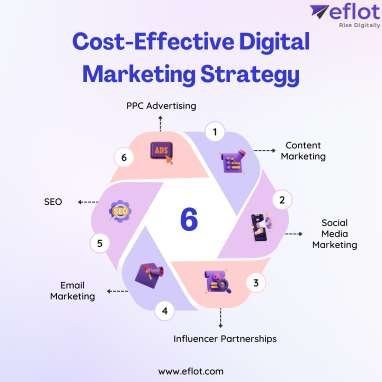
1. Content Marketing: Creating valuable and relevant content is a low-cost way to attract and engage your target audience. Blogging, infographics, and videos can position your brand as an authority in your industry. Focus on search engine optimization (SEO) to improve organic reach.
2. Social Media Marketing: Leveraging social media platforms can be highly cost-effective. Regularly posting and engaging with your audience on platforms like Facebook, Instagram, LinkedIn, and Twitter requires minimal financial investment. Use organic tactics such as participating in relevant groups, running contests, and collaborating with influencers to extend your reach.
3. Email Marketing: Email marketing remains one of the highest ROI channels. Building and nurturing an email list allows you to directly communicate with potential and existing customers. Use personalized and segmented emails to drive engagement and conversions.
4. SEO: Investing time in optimizing your website for search engines can yield long-term benefits. Focus on keyword research, on-page SEO, and quality backlinks to improve your site’s visibility and attract organic traffic.
5. Pay-Per-Click (PPC) Advertising: While not entirely free, PPC campaigns, such as Google Ads, allow you to control your budget and target specific audiences. With careful keyword selection and ongoing optimization, PPC can be a cost-effective way to drive targeted traffic.
6. Influencer Partnerships: Collaborating with micro-influencers can be more affordable than working with high-profile figures. Micro-influencers often have highly engaged audiences, which can lead to higher conversion rates.
Digital marketing is no longer a luxury but a necessity for businesses of all sizes. Its advantages, including wider audience reach, cost-effectiveness, measurable results, enhanced customer engagement, higher conversion rates, improved brand credibility, and personalization, make it an invaluable tool in today's competitive marketplace. By leveraging the power of digital marketing, businesses can not only survive but thrive in the digital age.
Digital Marketing services in Other Locations in India
Bangalore | Hyderabad | Chennai | Pune | Ahmedabad | Coimbatore | Mumbai | Kolkata | Patna | Amritsar | Indore | Kozhikode | Trivandrum | Jaipur | Nagpur | Gwalior | Dehradun | Noida | Vizag | Raipur | Agra | Gurgaon | Madurai | Udaipur | Thrissur |