

























How to Optimize Your Writing for SEO Content Success
Learn essential strategies to optimize your writing for SEO, improve content performance, and drive organic traffic to your website effectively easily and fast.

In digital marketing, the ability to create content that interests both search engines and human readers is essential. Successful SEO content writing is more than just stuffing articles with keywords; it's about providing entertaining, useful, and meaningful material that meets the demands of the reader while also adhering to search engine algorithms. The art of SEO content authoring is essential for any organization wanting to improve its online presence and attract more organic traffic.
As a digital marketing professional with vast experience writing SEO content, I've observed that true SEO success requires a thorough understanding of both your target audience and how search engines operate. Over the years, I've helped a variety of organizations alter their online presence by using SEO content strategies that not only boost rankings but also create trust and authority in their market.
Understanding SEO and Its Impact on Content Creation
Writing SEO content is crucial for improving your website’s search engine ranking and visibility. This style of writing involves integrating targeted keywords and phrases into well-crafted articles that offer genuine value to readers.
-
SEO Content Fundamentals: Unlike traditional content writing, SEO content focuses on aligning with specific keywords that users type into search engines. The goal is to optimize your content so that search engines deem it a relevant answer to users' queries.
-
Quality and Relevance: High-ranking content must not only contain keywords but also provide depth, relevance, and value, addressing the readers’ intent and questions thoroughly.
-
Reader Engagement: Engaging SEO content goes beyond merely inserting keywords; it involves crafting articles that capture and retain the reader's attention. This can be achieved through interactive elements, engaging storytelling, and useful, timely information that encourages readers to stay on the page longer.
-
Consistency and Freshness: Search engines favor websites that consistently update their content and keep it fresh. Regularly adding new, relevant content and updating existing articles to reflect the latest information or trends not only helps maintain a loyal audience but also gives search engines more reasons to index your site frequently.
Structuring Your SEO Content for Maximum Impact
Effective structuring is vital for SEO success as it enhances both readability and search engine visibility. Begin by using a clear hierarchical layout with H1 for the main title and H2 and H3 for subheadings, which helps search engines understand the content's structure. Keep paragraphs concise and use bullet points or numbered lists to break down complex information, making it easier for users to digest and stay engaged. Incorporate multimedia elements like images, videos, and infographics, and ensure they are tagged with descriptive alt text to boost SEO further. Proper use of white space is also crucial, as it prevents the content from appearing too crowded and helps highlight important information.
Writing Engaging and Optimized Content
The essence of writing SEO content is to engage readers with compelling, informative, and actionable information.
-
Balance Keyword Use with Natural Writing: Your content should read naturally to the audience, even with the integration of target keywords. Avoid over-optimizing as it can detract from the readability and quality of your work.
-
Answer Key Questions: Focus on creating content that answers specific questions. This not only meets user intent but can also position your content to be featured in Google’s featured snippets, providing maximum visibility.
-
Use Varied Content Formats: Incorporate different content types such as text, lists, bullet points, images, and videos to cater to different preferences and improve engagement. This variety can help make complex topics more understandable and keep the audience interested.
-
Incorporate Storytelling: Utilize storytelling to make your content more relatable and engaging. Presenting real-life scenarios or case studies can help illustrate points more clearly and keep the reader absorbed, enhancing the emotional connection with your audience.
Keyword Research: The Foundation of SEO Content Writing
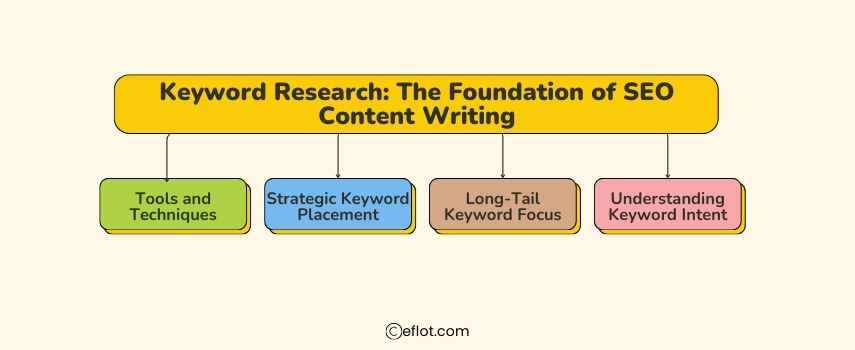
Effective Writing SEO content begins with robust keyword research. This process identifies the terms and phrases that your target audience is searching for, which should guide the themes and topics of your content.
-
Tools and Techniques: Utilize tools like Google Keyword Planner, Ahrefs, and SEMrush to discover keywords that align with your content goals. Look for keywords with high search volumes and low to moderate competition to maximize your chances of ranking well.
-
Strategic Keyword Placement: Once you've identified your keywords, integrate them naturally into your content. They should appear in critical places like the title, headings, opening paragraphs, and throughout the article to maintain keyword density without keyword stuffing.
-
Long-Tail Keyword Focus: Prioritize long-tail keywords, which are longer and more specific phrases that visitors are more likely to use when they’re closer to a point of purchase or when using voice search. These keywords often have a lower search volume but can attract more qualified traffic and have a higher conversion rate due to their specificity.
-
Understanding Keyword Intent: It’s essential to understand the intent behind the keywords you select. Whether the intent is informational, transactional, or navigational, the content you create should directly answer or relate to the intentions of your potential visitors. This alignment ensures that your content satisfies user queries, which can lead to higher search rankings and better user engagement.
Case studies
Evernote, a popular note-taking and organization app, sought to enhance its visibility and engagement through its blog. The goal was to attract more organic search traffic, which would lead to increased app downloads and user engagement.
Challenge:
Despite having a strong product, Evernote's blog struggled to rank well for targeted keywords related to productivity and note-taking. The content was extensive but lacked optimization for SEO, resulting in lower visibility and engagement than potential competitors in the space.
Solution:
Evernote revamped its content strategy by conducting in-depth keyword research to identify high-value keywords relevant to its audience. They optimized existing content and structured new posts around these keywords, ensuring they were included in titles, headers, and naturally within the text. The company also improved internal linking to keep users engaged and reduce bounce rates and optimized images and multimedia content to enhance user experience. By making these changes, Evernote’s blog saw a significant increase in organic search traffic, longer user sessions, and higher engagement, ultimately leading to more app downloads.
Case study 2
Canva, an online graphic design tool, aimed to leverage its blog as a key tool for attracting new users and converting them into active customers. Their objective was to dominate the design and DIY content space in search engine rankings.
Challenge:
The main challenge was the highly competitive nature of the content landscape in graphic design. Canva needed to outrank established competitors with strong domain authority who had been producing similar content for years.
Solution:
Canva focused on creating unique, high-quality content that was not only optimized for SEO but also provided immense value and utility to readers. They utilized a comprehensive keyword strategy that included long-tail keywords specific to niche design topics, which were less competitive and more likely to attract a dedicated audience. Each piece of content was meticulously optimized for readability and user engagement, incorporating rich media such as tutorials, templates, and design guides, which also improved their remaining time. They also implemented a robust backlink strategy by encouraging sharing and featuring guest posts from influential designers. As a result, Canva saw a substantial improvement in SEO rankings, increased traffic from organic searches, and a higher rate of conversion from readers to users of their design platform.
Writing SEO content successfully requires a blend of strategic planning, technical SEO skills, and creative writing. By following the strategies outlined in this guide, you can optimize your content for search engines while ensuring it remains engaging and valuable to readers. Remember, SEO is an ongoing process that demands adaptability and continuous learning. Keep refining your approach based on performance data and evolving SEO practices to maintain and improve your content's search rankings over time.
Digital Marketing services in Other Locations in India
Bangalore | Hyderabad | Chennai | Pune | Ahmedabad | Coimbatore | Mumbai | Kolkata | Patna | Amritsar | Indore | Kozhikode | Trivandrum | Jaipur | Nagpur | Gwalior | Dehradun | Noida | Vizag | Raipur | Agra | Gurgaon | Madurai | Udaipur | Thrissur |