














Digital Marketing Tips for Entrepreneurs and Startups
Learn essential digital marketing tips tailored for Indian entrepreneurs and start-ups to grow your business online effectively.
Have you ever wondered how startups and new ventures climb the ranks in a competitive online space? As a digital marketing specialist, I’ve had the privilege of helping businesses tap into the power of digital marketing in India. The change in digital marketing in India has opened doors for entrepreneurs to reach nationwide audiences, engage diverse demographics, and boost brand visibility. Embracing digital marketing in India is not just about running ads or posting on social media.
It involves understanding your target market, refining your approach, and leveraging data-driven insights. Indeed, digital marketing in India has become a game-changer for startups seeking credibility and lasting growth. By mastering digital marketing in India, entrepreneurs can optimize limited resources, stand out in crowded industries, and fast-track their journey from silence to recognition. That’s why stepping into digital marketing in India can mark the difference between a small operation and a growing empire.
Understanding the Indian Digital Environment
India’s digital environment has evolved at an extraordinary pace, making it one of the most dynamic and rapidly growing internet markets in the world. Below are some key factors that shape the Indian digital environment:
-
Rapid Internet Penetration
-
India’s internet user base is consistently on the rise, with millions of new users coming online each year.
-
Affordable smartphones and decreasing data costs have fueled this growth, extending internet access to semi-urban and rural areas.
-
Mobile-First Culture
-
A large segment of users primarily accesses the internet via mobile devices.
-
Apps and websites are increasingly being designed with a mobile-first approach to cater to this majority, focusing on speed, ease of use, and perceptive navigation.
-
Regional and Local Languages
-
India’s linguistic diversity poses both a challenge and a massive opportunity. Many new internet users prefer content in their native languages.
-
Businesses that localize content offering Hindi, Bengali, Tamil, or other language options are better positioned to engage audiences in different regions.
-
Diversified Consumer Base
-
Urban users often seek advanced services like online banking, streaming platforms, and e-commerce.
-
Rural users typically look for information on agriculture, government schemes, and job opportunities, though entertainment and social media apps are also popular across the board.
-
E-Commerce Boom
-
Online shopping has become mainstream, driven by convenience, competitive pricing, and the rise of smartphone usage.
-
Platforms like Amazon and Flipkart have adapted to regional market needs by adding local-language options and cash-on-delivery services.
-
Social Media Dominance
-
Social media platforms particularly WhatsApp, Facebook, Instagram, and YouTube are deeply ingrained in daily life.
-
These platforms not only serve as communication tools but also as gateways for news, entertainment, and product discovery.
Importance Of Digital Marketing For Startups
-
Cost-Effective Visibility
Traditional advertising like TV commercials or billboards can quickly eat up a limited startup budget, leaving little room for experimentation. Digital marketing channels such as social media, email, and search engines are significantly cheaper and allow you to reach thousands (or even millions) of potential customers. By investing in well-targeted online campaigns, startups can stretch their resources further, making each marketing rupee work harder. -
Targeted Audience Reach
One of the biggest advantages of digital marketing is the ability to hyper-target audiences. Startups can tailor their messages based on factors like location, demographics, interests, and online behavior. Rather than shouting into the void, digital platforms let you speak directly to the people who are most likely to be interested in your products or services. -
Real-Time Feedback and Adaptability
Analytics tools such as Google Analytics and social media dashboards give immediate insights into what’s working and what isn’t. If your campaign isn’t generating the desired clicks or conversions, you can pause, tweak your approach, and relaunch all in a matter of hours or days. This agility is invaluable for startups that need quick feedback loops to refine their offerings and marketing strategies. -
Brand Building and Credibility
Establishing a strong brand presence is crucial for any emerging business. An effective digital marketing strategy helps startups quickly showcase their values, vision, and unique offerings. Frequent, engaging content whether it’s how-to blog posts, behind-the-scenes videos, or customer testimonials can build trust and establish credibility in a crowded marketplace. -
Scalability and Measurable Growth
Digital marketing efforts grow alongside your business. As you expand into new regions or introduce new product lines, you can scale up campaigns without completely overhauling your marketing playbook. You also have a treasure trove of data to measure success, helping you make informed decisions about where to invest your time and budget next.
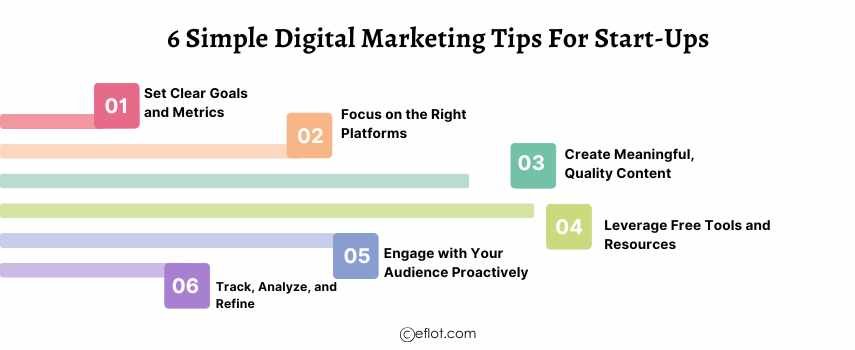
6 Simple Digital Marketing Tips For Start-ups
-
Set Clear Goals and Metrics
Before diving into marketing tactics, define what success looks like. Do you want more website traffic, a better brand reputation, or increased product sales? Setting clear objectives not only keeps you focused but also helps you measure progress. Pick metrics such as conversion rates, email open rates, or cost-per-acquisition to gauge if you’re heading in the right direction. -
Focus on the Right Platforms
With so many channels available Facebook, Instagram, Twitter, LinkedIn, and YouTube it’s easy to get overwhelmed. Research where your ideal customers spend their time online, and prioritize those platforms first. For example, if you’re targeting young professionals, LinkedIn might be more effective than TikTok. Starting small and doing it well often yields better results than spreading yourself too thin. -
Create Meaningful, Quality Content
Content marketing is about offering something valuable to your audience such as how-to guides, expert insights, entertaining videos, or special promotions. When your content is genuinely helpful or engaging, people will share it, comment on it, and remember your brand. Over time, consistent posting and positive user interactions can boost your rankings in search engines and help you build a loyal community. -
Leverage Free Tools and Resources
Beginners can dip their toes into digital marketing without spending a fortune on fancy software. Tools like Google Analytics, Google Trends, and social media analytics provide in-depth data about user behavior, popular search terms, and engagement rates. By interpreting this data, you can identify what resonates with your audience and what doesn’t so you can fine-tune your strategy. -
Engage with Your Audience Proactively
Don’t just post and vanish. If someone takes the time to comment, reply, or share your content, respond to them. A simple “Thank you” or a thoughtful answer to a question can spark conversations and turn casual viewers into loyal supporters. Engagement also boosts your visibility on most social platforms’ algorithms, meaning more people will discover your brand. -
Track, Analyze, and Refine
The beauty of digital marketing is the wealth of data at your fingertips. Monitor metrics like click-through rates, bounce rates, and conversion rates to understand what’s driving results. Then, refine your campaigns accordingly. This cycle of experimenting, measuring, and improving ensures that your marketing strategy keeps changing and growing.
5 Tips Entrepreneurs Need To Know About Digital Marketing.
-
Know and Flaunt Your Unique Selling Proposition (USP)
Your USP is the one thing that sets you apart from the competition maybe it’s an innovative feature, exceptional customer service, or a strong ethical stance. Clearly articulating this USP in all your marketing materials ensures your audience knows why they should choose you. Think of your USP as your guiding star, it should inform every piece of content and every ad you create. -
Optimize Your Website for Mobile Users
As smartphone usage continues to dominate internet access, a mobile-friendly site is no longer optional. If your website loads slowly or is hard to navigate on a phone, prospective customers might leave quickly sending a negative signal to search engines. Ensure fast load times, clear call-to-action buttons, and an intuitive layout, especially for smaller screens. -
Grow and Nurture an Email List
Social media might be great for awareness, but email is often where real conversions happen. Encouraging people to sign up for your newsletters or exclusive offers gives you a direct line to their inbox a powerful tool for both building relationships and driving sales. Remember to segment your list, so you can send more relevant emails to each group and avoid spamming them with irrelevant content. -
Experiment with Paid Advertising
While organic reach is valuable, paid ads on Google, Facebook, or LinkedIn can give you a quick visibility boost. Start small, set a modest daily budget, and closely track your campaign’s performance. Whether it’s pay-per-click (PPC) or sponsored posts, paid advertising can rapidly test which ads resonate most with your target audience. If a particular ad shows promise, consider allocating more resources to maximize returns. -
Stay Educated About Trends and Algorithms
The digital marketing landscape evolves at lightning speed. Platforms update algorithms, new social networks emerge, and consumer preferences shift with cultural trends. Allocate time each month to read up on industry blogs, watch webinars, or follow marketing experts on LinkedIn. Staying informed helps you adapt your strategies proactively and maintain a competitive edge.
Overcoming Common Challenges
-
Budget Constraints
-
Prioritize channels with the highest ROI. Focus on one or two platforms where your audience is most active. Leverage organic strategies before diving into costly ad campaigns.
-
Limited Manpower
-
Automate repetitive tasks like email follow-ups or social media scheduling. Consider hiring freelancers for specialized tasks or partnering with agencies.
-
Lack of Clear Objectives
-
Set SMART (Specific, Measurable, Achievable, Relevant, Time-bound) goals for every marketing effort, whether it’s growing your email list or increasing sales.
-
Stiff Competition
-
Differentiate through niche marketing. Identify a specific problem your product solves better than anyone else, then highlight that advantage consistently.
-
Measuring Effectiveness
-
Use analytics tools to track metrics like conversion rates, bounce rates, and average session duration. Data-driven insights guide future decisions and help you pivot quickly when needed.
Case Studies
Case Study1:
Taste of Tradition is a small venture that packages and sells premium Indian spices to health-conscious food lovers. Despite the increasing global fascination with Indian cuisine, the brand initially struggled to stand out among large spice conglomerates and local competitors with well-established offline distribution networks.
Challenges:-
Taste of Tradition is a small venture selling premium Indian spices to health-conscious food lovers. The startup initially struggled to stand out against larger spice conglomerates and local competitors, especially with limited marketing funds. They tackled this by releasing bilingual recipe tutorials in Hindi and Bengali, connecting deeply with regional audiences. Partnering with popular home-cooking YouTubers showcased how these spices enhance everyday meals, and custom discount codes helped measure real engagement.
Results
Within six months, Taste of Tradition reported a 40% increase in online orders, largely attributed to influencer-driven traffic. Their bilingual recipe videos quickly went viral, garnering thousands of shares. Most importantly, the brand built a supportive community that valued both flavor and ethical sourcing, positioning Taste of Tradition as more than just another spice seller.
Case Study2:
KurtiKraft is a startup specializing in trendy yet affordable ethnic wear for India’s rapidly evolving fashion market. Although the brand had a small loyal following on local college campuses, it lacked a cohesive online marketing strategy. Faced with big-name e-commerce giants and fast-fashion brands, KurtiKraft needed to amplify its online presence quickly.
Challenges:-
KurtiKraft is a startup aiming to bring trendy yet affordable ethnic wear to fashion-conscious Indian youth. Facing strong competition from established e-commerce giants, they initially lacked broad online visibility and struggled with limited digital marketing expertise. KurtiKraft focused on short-form video content by creating lively Instagram Reels, tapping into hashtags like #DesiStyle to reach new audiences. Their festive giveaways during Diwali and Navratri spurred user-generated content, amplifying brand presence.
Results
In just four months, KurtiKraft saw a 35% boost in overall sales. Their Instagram following tripled thanks to engaging Reels and festive promotions, and user-generated content helped the brand connect more deeply with young shoppers. KurtiKraft’s online visibility soared, and the brand leveraged this momentum to expand into new regions proving that creative, culturally aligned digital marketing can give even a small fashion startup a big edge in India’s competitive market.
For Indian entrepreneurs and startups, the digital realm offers a launch to scale up quickly and efficiently. From social media engagement to SEO, every aspect of digital marketing in India plays a vital role in shaping your brand’s story. However, success doesn’t happen overnight. It demands a well-rounded strategy, continuous improvement, and a keep eye on changing consumer behaviors. By tailoring your approach to local cultures, investing in high-quality content, and optimizing for mobile platforms, you can carve out a distinct place in a saturated marketplace. Stay open to experimentation test new ad formats, explore emerging social platforms, and gather feedback every step of the way.
Digital Marketing services in Other Locations in India
Bangalore | Hyderabad | Chennai | Pune | Ahmedabad | Coimbatore | Mumbai | Kolkata | Patna | Amritsar | Indore | Kozhikode | Trivandrum | Jaipur | Nagpur | Gwalior | Dehradun | Noida | Vizag | Raipur | Agra | Gurgaon | Madurai | Udaipur | Thrissur |