















Digital Marketing in India: Trends, Strategies & Future
Discover key digital marketing trends, strategies, and the future outlook in India to stay ahead in the evolving online marketing environment.
Digital marketing in India has undergone a significant transformation in recent years, with businesses increasingly focusing on online platforms to connect with their audience. The country's rapid internet growth, smartphone penetration, and changing consumer behavior have turned digital marketing into an essential tool for businesses, big and small. As a dynamic market with unique cultural and technological challenges, India presents a rich world for marketers to explore and innovate.
Let’s get into the evolution of digital marketing in India, its key components, successful strategies tailored to the Indian market, and future trends. By understanding the dynamics of this field, businesses can make informed decisions and stay ahead in the competitive digital ecosystem.
The Rise of Digital Marketing in India
India's digital revolution began in earnest with the introduction of affordable smartphones and data plans, especially after the launch of Reliance Jio in 2016. This led to a massive increase in internet penetration, and today, India is home to over 700 million internet users, making it one of the largest online markets in the world.
As more consumers shifted online, businesses quickly recognized the potential of digital platforms to reach a larger audience, resulting in the exponential growth of digital marketing. From startups to established brands, companies began leveraging digital channels like social media, search engines, and e-commerce platforms to market their products and services.
The Indian government's initiatives, such as "Digital India," have also played a pivotal role in encouraging digital adoption across industries, making it easier for businesses to transition from traditional marketing strategies to digital.
Key Components of Digital Marketing
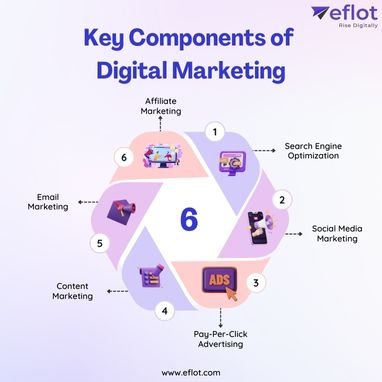
Digital marketing consists of several interconnected components, each playing a crucial role in reaching, engaging, and converting potential customers. Let’s explore the most critical elements:
-
Search Engine Optimization (SEO)
SEO is the backbone of digital marketing strategies in India. With millions of online searches conducted daily, businesses strive to rank higher on search engine results pages (SERPs) to increase their visibility. SEO practices in India focus heavily on keywords in regional languages as well, given the diversity of the population. By optimizing their websites for search engines, businesses can attract organic traffic and improve brand awareness.
-
Social Media Marketing (SMM)
India has a massive user base on social media platforms like Facebook, Instagram, Twitter, LinkedIn, and YouTube. Social media marketing allows businesses to engage with their audience, run targeted ads, and build brand loyalty. Platforms like WhatsApp and regional apps also provide unique opportunities for reaching niche markets.
-
Pay-Per-Click Advertising (PPC)
PPC advertising involves placing ads on search engines or social media platforms and paying for each click received. This is a popular method for businesses to generate leads quickly. Google Ads and Facebook Ads are widely used in India for PPC campaigns, allowing businesses to reach a highly targeted audience based on demographics, interests, and behavior.
-
Content Marketing
Content marketing is centered around creating and distributing valuable, relevant content to attract and retain a target audience. In India, the demand for localized content—content tailored to the regional language and culture—is growing. Blogs, videos, infographics, and podcasts are popular forms of content that help businesses build trust and authority in their industries.
-
Email Marketing
Email marketing remains one of the most effective digital marketing strategies, particularly for businesses aiming to nurture leads and maintain customer engagement. By sending personalized, targeted emails, businesses can promote products, share updates, and build a loyal customer base.
-
Affiliate Marketing
Affiliate marketing is a performance-based marketing strategy where businesses reward affiliates (partners) for bringing traffic or sales to their websites. This model has gained traction in India, with bloggers, influencers, and content creators playing a significant role in driving affiliate marketing efforts for e-commerce platforms and other businesses.
Digital Marketing Strategies for the Indian Market
India is a diverse and complex market, with varying consumer preferences, behaviors, and languages. To succeed, businesses must adopt strategies tailored to this market's unique characteristics.
-
Localized Content Strategy
India’s linguistic diversity is immense, with over 22 official languages. Marketers must create localized content that resonates with regional audiences. By providing information in local languages, businesses can connect more deeply with their audience and improve engagement.
-
Mobile-First Approach
With the majority of internet users in India accessing the web via mobile devices, a mobile-first approach is essential. Websites, apps, and digital campaigns must be optimized for mobile devices to ensure a seamless user experience.
-
Voice Search Optimization
Voice search is rapidly gaining popularity in India due to the increasing use of smart speakers and voice assistants like Google Assistant and Alexa. Marketers must optimize their content for voice search queries, which often differ from traditional typed searches, by focusing on long-tail keywords and natural language.
-
Video Marketing
India's consumption of video content has skyrocketed, particularly on platforms like YouTube and TikTok (before its ban). Video marketing is a powerful way for businesses to engage with their audience, tell compelling stories, and create shareable content. Short videos, live streaming, and tutorials are especially effective in this market.
-
Influencer Marketing
Influencer marketing has gained tremendous traction in India, with influencers ranging from celebrities to micro-influencers playing a critical role in shaping consumer preferences. Collaborating with influencers allows brands to tap into their followers' trust and reach a more targeted audience.
-
Data-Driven Marketing
Data-driven marketing involves using data analytics to make informed marketing decisions. In India, businesses are increasingly relying on data to understand consumer behavior, track campaign performance, and refine their strategies for maximum impact.
Challenges in Digital Marketing in India
Despite its potential, digital marketing in India faces several challenges that businesses must navigate.
Regional Diversity and Language Barriers
India’s cultural and linguistic diversity can be both an opportunity and a challenge. Crafting a one-size-fits-all digital marketing strategy is not effective in such a diverse environment, requiring businesses to invest in localization and regional targeting.
Internet Penetration and Connectivity Issues
While internet penetration in urban areas is high, rural India still faces challenges related to connectivity and access to affordable, high-speed internet. Businesses targeting rural consumers need to consider these limitations when planning their digital marketing strategies.
Digital Literacy
Although more Indians are coming online, digital literacy remains a challenge, particularly among older generations and in rural areas. Businesses need to focus on user-friendly, accessible content to ensure that their marketing messages reach all demographics.
Future Trends in Digital Marketing
The digital marketing in India is constantly evolving. Here are some key trends that are expected to shape the future:
Artificial Intelligence (AI) and Automation
AI-powered tools are transforming the way businesses approach digital marketing. From chatbots and customer service automation to AI-driven content creation and personalized marketing, AI is helping businesses improve efficiency and customer experience.
Growth of E-Commerce
The e-commerce sector in India is booming, with platforms like Amazon, Flipkart, and JioMart seeing exponential growth. Digital marketing will play a critical role in helping e-commerce brands build their presence, engage with customers, and drive sales.
Augmented Reality (AR) and Virtual Reality (VR)
AR and VR technologies are gaining traction in India’s retail and real estate sectors, offering immersive experiences to consumers. These technologies enable businesses to create interactive, engaging marketing campaigns that stand out in the competitive market.
5G Technology and Digital Expansion
The rollout of 5G technology in India will revolutionize digital marketing by enabling faster internet speeds, improved connectivity, and better mobile experiences. This is likely to drive further growth in mobile marketing, video content consumption, and e-commerce activities.
FAQs on Digital Marketing in India
-
What is the scope of digital marketing in India?
Digital marketing in India has a huge scope, with increasing internet penetration, growing e-commerce, and the rise of social media creating numerous opportunities for businesses to reach a wider audience. -
What is the most effective digital marketing strategy in India?
There is no one-size-fits-all answer, as the most effective strategy depends on the target audience and business goals. However, localized content, mobile-first design, and influencer marketing are highly effective in the Indian market. -
How important is SEO in Indian digital marketing?
SEO is crucial in India’s digital marketing, given the large volume of search engine queries in regional languages. Businesses that optimize their websites for local keywords and search intent can drive significant organic traffic. -
How is digital marketing evolving in rural India?
Digital marketing is slowly making its way into rural India, thanks to increasing smartphone usage and government initiatives. However, businesses must account for lower digital literacy and connectivity challenges when targeting rural areas. -
What is the role of influencers in Indian digital marketing?
Influencers play a significant role in India’s digital marketing scene, especially on platforms like Instagram and YouTube. Collaborating with influencers helps brands build trust and reach niche audiences.
Digital marketing in India is an exciting, ever-changing field, shaped by the country’s unique demographic and technological environment. As internet usage grows and consumer behavior evolves, businesses need to adopt agile, localized strategies to stay ahead of the curve. By leveraging emerging technologies like AI, optimizing for mobile and voice search, and embracing content that resonates with regional audiences, businesses can thrive in this dynamic market.
As the digital revolution continues, the future of digital marketing in India holds immense promise for brands willing to innovate and adapt to the local market's demands.
Digital Marketing services in Other Locations in India
Bangalore | Hyderabad | Chennai | Pune | Ahmedabad | Coimbatore | Mumbai | Kolkata | Patna | Amritsar | Indore | Kozhikode | Trivandrum | Jaipur | Nagpur | Gwalior | Dehradun | Noida | Vizag | Raipur | Agra | Gurgaon | Madurai | Udaipur | Thrissur |