








How AI-Powered PPC Strategies Are Changing Marketing?
Discover how AI-powered PPC strategies are transforming digital marketing through automation, targeting, and data-driven decisions.

Are your paid campaigns not delivering the expected results despite continuous keyword and bid updates?
Many businesses struggle with rising ad costs, inefficient targeting, and low return on investment, even after regular adjustments.
AI-powered PPC strategies address these challenges by analyzing user behavior in real time, automatically optimizing campaigns, and quickly identifying what drives results, providing better performance than traditional methods.
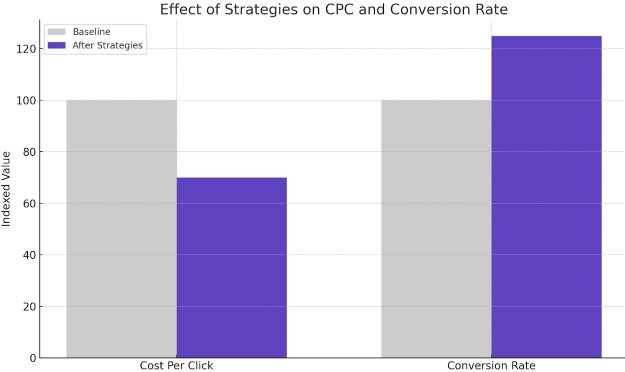
Studies suggest these strategies can reduce cost per click by up to 30% and increase conversion rates by 25%.
What Is an AI-Powered PPC Strategy?
An AI-powered PPC (Pay-Per-Click) strategy applies artificial intelligence to enhance the management and performance of digital advertising campaigns. It uses machine learning algorithms to analyze user behavior, search patterns, and performance data, allowing automated, data-driven decisions that improve efficiency and results.
AI dynamically adjusts bids based on factors like device type, time of day, and likelihood of conversion. It also refines audience targeting by identifying patterns in user intent, demographics, and past interactions. In creative testing, AI helps identify which ad variations perform best, optimizing content to increase engagement and conversions.
This strategy supports scalable, consistent campaign performance with reduced manual oversight. Reacting to real-time data helps marketers allocate budgets more effectively and achieve higher returns on ad spend.
Why Traditional PPC Isn’t Working Anymore
Traditional PPC strategies depend on manual processes like bidding, targeting, and campaign optimization, an approach that struggles to keep up with the speed and complexity of modern digital advertising.
Here’s why:
-
Audience behavior is fragmented across multiple platforms, devices, and channels, making it difficult to target effectively without automation.
-
Search intent evolves rapidly, and static keyword targeting often misses these shifts.
-
Manual bidding lacks real-time responsiveness, causing missed opportunities or overspending during demand spikes.
-
Ad testing is slow and resource-heavy, delaying performance improvements.
-
Even experienced marketers face challenges managing multiple campaigns without intelligent tools to assist.
AI-powered PPC solves these issues by delivering automation, real-time optimization, and data-driven targeting, supporting better results with less manual effort.
How Do AI Tools Improve PPC Campaigns?
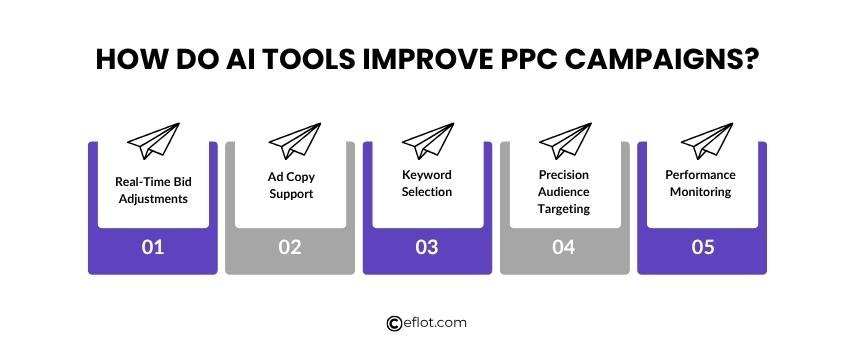
PPC services use AI tools to simplify and improve advertising by automating tasks and making data-driven decisions faster than manual methods. Here’s how they support more efficient campaign management:
-
Real-Time Bid Adjustments
AI automatically changes bids based on user behavior, device type, time of day, and past results, helping get better value from each click.
-
Ad Copy Support
AI systems assist in creating ad headlines and descriptions and test different versions to see what works best.
-
Keyword Selection
By analyzing search trends and patterns, AI tools recommend keywords with higher potential and filter out low-performing ones.
-
Precision Audience Targeting
AI looks at user behavior and signals to find audiences most likely to convert, without relying on manual filters.
-
Performance Monitoring
It tracks performance data continuously and offers insights early, allowing quicker adjustments before major issues occur.
AI-powered features built into tools like Google Ads and Meta campaigns help businesses manage their PPC campaigns more effectively and stay responsive in a fast-moving digital space.
How Can AI Help Target the Right PPC Audience?
AI improves audience targeting by analyzing behavioral signals that go beyond basic demographics. Instead of guessing who might click, AI tools identify patterns that point to higher intent and relevance.
Here’s how AI refines PPC audience targeting:
-
Search Behavior Tracking
AI looks at users’ previous search activity to understand their interests and intent before they see your ad.
-
Engagement History
It considers how users have interacted with similar products, services, or competitors to build more precise audience segments.
-
Contextual Relevance
AI uses timing, location, and device type to deliver ads when users are most likely to engage.
-
Real-Time Learning
Platforms like Google Ads and Meta Ads continuously update audience groups using tools like Custom Audiences and Lookalike Audiences, adapting based on ad performance.
Instead of relying on fixed targeting lists, AI dynamically identifies potential customers who align with your goals, helping reduce wasted ad spend and improve campaign outcomes.
Common Mistakes to Avoid in AI-Powered PPC Strategies
Using AI in PPC can significantly improve performance, but only when applied correctly. Here are key mistakes to avoid:
-
Over-relying on automation
AI is powerful, but it should not replace human oversight. Regular monitoring and strategic input are still essential for success.
-
Feeding poor-quality inputs
AI cannot compensate for weak landing pages, unclear messaging, or irrelevant offers. Strong foundational assets are still critical.
-
Ignoring performance insights
Clicks don’t always mean conversions. Reviewing campaign data and adjusting based on what drives results remains necessary.
-
Neglecting quality
AI can test variations, but it still needs high-quality ad copy, visual assets, and compelling offers to deliver strong outcomes.
-
Avoiding these pitfalls allows AI to support, not replace, strategic decision-making, leading to a more efficient and effective PPC approach.
Benefits of AI-Powered PPC Strategies
When implemented effectively, AI-powered PPC offers several advantages:
-
Reduced cost per click (CPC) through optimized real-time bidding.
-
Improved click-through rates (CTR) by identifying and prioritizing high-performing ads.
-
Accelerated testing of multiple ad variations, delivering insights within hours instead of weeks.
-
Immediate campaign adjustments to address issues without delay.
-
Efficient budget allocation focused on channels and ads driving the best results.
FAQs
1. Will AI take over PPC?
Yes. AI is increasingly automating key PPC tasks like bidding, targeting, and ad testing, improving campaign efficiency and performance.
2. How to use AI for PPC?
Use AI tools to automate bid adjustments, identify high-performing keywords, create and test ads, and target the right audience based on user behavior and data patterns.
3. What are AI-powered shopping ads?
AI-powered shopping ads use machine learning to optimize product listings, target relevant shoppers, and adjust bids automatically to maximize conversions.
4. How can AI be used for promotion?
AI can be used to analyze customer data, personalize ads, optimize budgets, and automate campaign management to improve promotional results.
5. What is the best AI tool for PPC ads?
There are several top AI tools for PPC, including Google Ads Smart Bidding, Microsoft Advertising, and various third-party platforms that offer automated bidding and audience targeting.
AI-powered PPC improves campaign efficiency through real-time data analysis and automation. It improves targeting, bidding, and ad performance while reducing manual effort. Success depends on quality inputs and ongoing oversight. Implementing AI-driven PPC is essential for staying competitive in today’s dynamic advertising environment.
Looking to improve your ROI with AI-powered PPC strategies?
Partner with Eflot to get the best results.
Contact us at [email protected]
Digital Marketing services in Other Locations in India
Bangalore | Hyderabad | Chennai | Pune | Ahmedabad | Coimbatore | Mumbai | Kolkata | Patna | Amritsar | Indore | Kozhikode | Trivandrum | Jaipur | Nagpur | Gwalior | Dehradun | Noida | Vizag | Raipur | Agra | Gurgaon | Madurai | Udaipur | Thrissur |