

























5 Reasons Why Your Website Ranking Is Not Stable
Discover five common reasons your website ranking fluctuates and learn how to address ranking instability in search results effectively.
Why does my website's ranking fluctuate so frequently? What causes it to rise at times and then unexpectedly drop? These are common concerns for website owners dealing with unstable search rankings. Such fluctuations can be frustrating, especially when the underlying reasons are unclear.
In reality, website rankings are dynamic and influenced by multiple factors daily. Understanding these factors is essential to managing your site effectively and minimizing unpredictable changes.
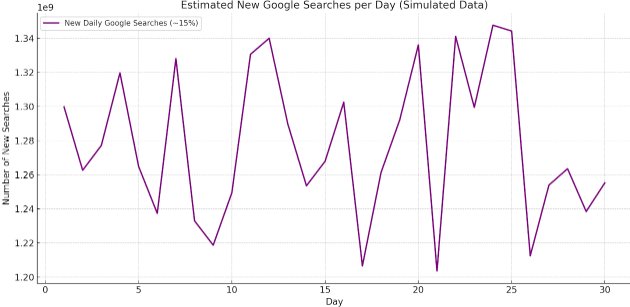
Did you know that about 15% of all Google searches every day are new? This means Google sees questions it has never seen before. Because of this, Google keeps changing its results to give the best answers. This can make your website ranking go up and down as the system learns and improves.
The Importance of Website Ranking for Your Business
Search engine ranking plays a direct role in how easily potential customers can find your business in SERPs. A stable position in search results helps maintain consistent visibility, supports lead generation, and contributes to sustained growth.
Unstable rankings can reduce traffic, limit reach, and affect business performance over time. Recognizing what causes these fluctuations allows you to respond strategically, protect your position in search results, and align your website with long-term business objectives.
5 Reasons Why Your Website Ranking Is Not Stable
Website rankings often change due to various factors. These factors influence how search engines view and place your site in search results. By understanding these key reasons, you can take smart actions to stabilize your ranking, attract more visitors, and build lasting online visibility.
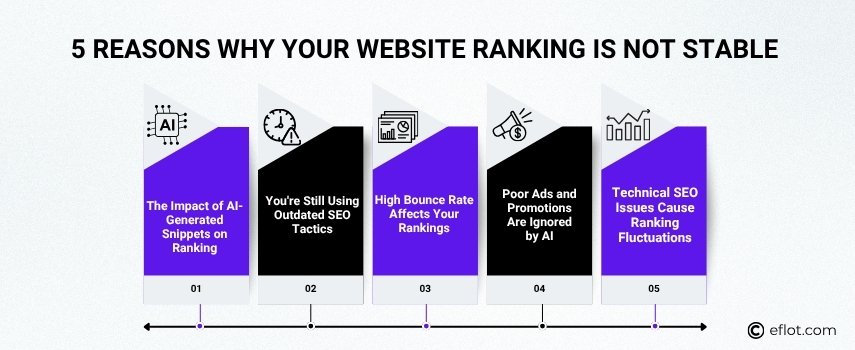
1. The Impact of AI-Generated Snippets on Ranking
Search engines today value clarity, structure, and scannability more than ever. If your page is filled with long paragraphs, vague headings, or weak formatting, it becomes hard to index and even harder to rank consistently.
You're not just competing with websites anymore, you’re competing with summaries.
AI and Google are pulling short, direct answers from well-structured content and placing them right in the results. If your content doesn’t deliver fast answers in a clear format, it won’t hold position.
Actions to take:
-
Writing with short paragraphs and strong subheadings
-
Adding FAQs and bulleted summaries
-
Starting each section with a direct answer or clear takeaway
If you skip this, your website ranking is not stable, because Google doesn’t know how to position your content.
2. You're Still Using Outdated SEO Tactics
Old methods like keyword stuffing, repetitive H1s, thin pages, or irrelevant backlinks may not hurt overnight, but they lead to slow, unpredictable ranking shifts.
SEO Isn't Dead, It's Mutating.
Modern SEO focuses on intent, clarity, and value. If your content sounds like it’s written for bots, not people, it won’t hold its place.
Actions to take:
-
Targeting real questions, not just keywords
-
Refreshing outdated blog posts
-
Making every page unique, useful and trustworthy
An outdated approach is one of the top reasons your website ranking is not stable.
3. High Bounce Rate Affects Your Rankings
Google now tracks what happens after a user clicks. If visitors bounce quickly, exit without scrolling, or don’t engage, it signals that your content didn’t help.
It’s not just about traffic, it’s about what they do once they land.
This is often called the “quality click.” If your page fails to hold attention, rankings drop.
Actions to take:
-
Writing direct, helpful intros
-
Breaking long content into digestible parts
-
Using visuals and internal links to guide users deeper
Poor engagement leads to instability. To Google, it looks like your page didn’t deliver, so your website ranking is not stable.
4. Poor Ads and Promotions Are Ignored by AI
Too many popups, affiliate links, or irrelevant product boxes can ruin the reading experience. Both users and search engines now treat aggressive ad layouts as a red flag.
Lazy ads don’t just get ignored, they get penalized.
Even subtle changes like moving an ad block lower or softening the tone can improve retention and reduce bounce.
Actions to take:
-
Placing ads only after helpful content
-
Making affiliate content look natural and honest
-
Reducing distractions, especially on mobile
Trust is important. If your site looks spammy, users will avoid it, and Google will lower your ranking.
5. Technical SEO Issues Cause Ranking Fluctuations
Sometimes, ranking problems are caused not by content or ads but by technical issues on your website. Problems like broken links, duplicate pages, slow loading, or poor site structure make it hard for search engines to understand your site. When Google cannot crawl or index your pages correctly, your website ranking becomes unstable.
Even small technical glitches can lead to sudden drops or erratic ranking changes.
Actions to take:
-
Regularly running technical SEO audits using tools like Google Search Console or Screaming Frog
-
Fixing broken links and removing duplicate content
-
Improving site speed and mobile usability
-
Ensuring your sitemap and robots.txt files are correctly configured
-
Making sure your site’s architecture allows easy navigation for both users and search engines
Taking care of these technical details keeps your site healthy and helps maintain stable rankings over time.
Website rankings will continue to fluctuate without addressing the key issues. Understanding these factors and taking consistent action is essential to maintaining a stable and strong presence in search results. Focus on clear content, updated SEO practices, user engagement, quality ads, and technical health. By doing so, you can reduce ranking instability and build lasting online visibility. Taking these steps now helps you stay competitive and avoid losing valuable traffic to others.
Need help improving your website ranking stability?
Our expert team can review your site, fix key issues, and guide you with proven strategies.
Contact us at [email protected] to get started.
Digital Marketing services in Other Locations in India
Bangalore | Hyderabad | Chennai | Pune | Ahmedabad | Coimbatore | Mumbai | Kolkata | Patna | Amritsar | Indore | Kozhikode | Trivandrum | Jaipur | Nagpur | Gwalior | Dehradun | Noida | Vizag | Raipur | Agra | Gurgaon | Madurai | Udaipur | Thrissur |