
























How to Use Search Volume for Content Strategy?
Struggling to rank your content? Learn how to use Search Volume to find high-impact keywords, boost traffic, and create content that converts. Start now!

When I started working in digital marketing, one of the biggest challenges I faced was figuring out why some content performed well while others hardly gained any traction. I would spend hours creating detailed blog posts, but they wouldn’t rank or attract the right audience. That’s when I learned the power of Search Volume. Understanding what people are actively searching for helped me create content that not only ranked higher but also brought in consistent traffic.
Many businesses struggle with the same issue they produce great content, but it doesn’t reach their target audience. The key is to focus on high Volume to ensure your content aligns with user demand. Whether you're an entrepreneur, a content marketer, or an SEO professional, using Search Volume in your content strategy can make a significant impact. Here, I’ll share with you how to use high-volume search effectively, backed by keyword research tools, content marketing strategies, and SEO best practices to help you drive more organic search traffic and improve your search engine rankings.
What is Search Volume?
Search Volume refers to the number of times a specific keyword or phrase is searched for in a given period, usually per month. It’s a crucial metric for content marketers and SEO specialists because it indicates the level of interest in a topic.
For example, if "best smartphones 2024" has a high Volume Search of 50,000 searches per month, it means many people are actively looking for this information. On the other hand, if a keyword has only 100 searches per month, it might not be worth prioritizing unless it has low competition and high relevance to your audience. By analyzing the high Volume, of Search marketers can identify high-impact keywords, improve audience engagement, and create data-driven content strategies that attract more traffic.
Importance of Search Volume in Content Strategy
Search Volume is one of the most critical factors in content strategy and SEO. It determines how many times a keyword is searched for in a given period, typically per month. Understanding the High Volume of Search helps businesses create content that aligns with user demand, ensuring that their efforts lead to higher traffic, better engagement, and improved search engine rankings.
Here’s why Volume Search is essential for an effective content strategy:
1. Identifies High-Value Content Topics
Creating content without understanding what people are searching for is like shooting in the dark. By analyzing the high Volume of Searches, marketers can identify high-impact keywords and focus on topics that attract more visitors.
For example, instead of writing a generic blog on "Digital Marketing," using keyword research tools might reveal that “Best Digital Marketing Strategies for 2024” has a high volume of Search, making it a better content choice.
2. Boosts Organic Search Traffic
Content optimized with a high volume of Search keywords increases the likelihood of ranking on the first page of search engines. Higher rankings lead to increased organic search traffic, which means more visitors find your content naturally without paid ads.
3. Helps Match Content with User Intent
Not all high-volume keywords serve the same purpose. Some users search for informational content, while others look for product recommendations or service providers. Through user intent analysis, businesses can create targeted content based on what their audience is looking for.
For instance, a blog targeting “What is Content Marketing?” serves an informational intent, while “Best Content Marketing Services Near Me” aligns with transactional intent.
Why Search Volume Matters in Content Strategy
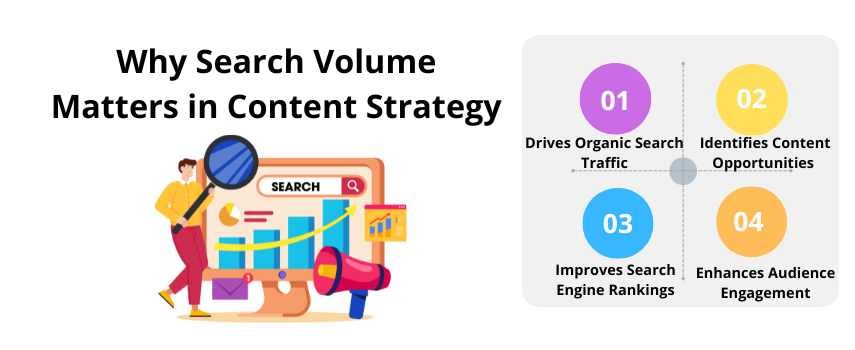
Using High Volume Search in your content strategy provides several benefits:
1. Drives Organic Search Traffic
Targeting keywords with a significant Volume of Searches ensures that your content reaches people who are actively searching for related topics. This helps in attracting organic search traffic without relying on paid ads.
2. Identifies Content Opportunities
Instead of guessing what topics might interest your audience, High Volume of Search data allows you to focus on what users are already looking for. This makes content planning more strategic and results-driven.
3. Improves Search Engine Rankings
Optimizing content based on SEO best practices and targeting a high Volume of Search keywords increases the chances of ranking higher in search results.
4. Enhances Audience Engagement
When your content aligns with what users are searching for, engagement levels rise. Whether it’s blog comments, shares, or time spent on the page, a user intent analysis helps you create content that truly resonates with your audience.
How to Use Search Volume for an Effective Content Strategy
1. Use Keyword Research Tools
Start by using keyword research tools to find keywords with strong high-volume searches. Some of the most effective tools include:
-
Google Keyword Planner (free)
-
Ahrefs
-
SEMrush
-
Ubersuggest
These tools help you analyze high-impact keywords, their competition level, and related keyword suggestions.
Example:
If you're in the fitness industry, searching for "weight loss tips" might show:
-
"Weight loss diet" – 40,000 searches/month
-
"Best exercises for weight loss" – 25,000 searches/month
-
"How to lose weight fast" – 70,000 searches/month
This data helps you focus on topics with high potential for organic search traffic.
2. Prioritize Keywords with the Right Balance of Search Volume & Competition
While targeting a high Volume of Search keywords is beneficial, some may have intense competition. In such cases, it's better to focus on long-tail keywords (longer, more specific phrases).
For example:
-
Instead of "best laptops" (high competition)
-
Target "best budget laptops under ₹40000" (moderate competition, strong High Volume Search)
This approach allows you to optimize content effectively and improve search engine rankings without facing extreme competition.
3. Optimize Content for User Intent
High Volume Search alone isn’t enough you must align your content with user intent.
There are three main types of search intent:
-
Informational: Users are looking for knowledge.
-
Example: "What is intermittent fasting?"
-
Navigational: Users want to find a specific brand or website.
-
Example: "Nike running shoes official store"
-
Transactional: Users are ready to make a purchase.
-
Example: "Buy the best protein powder online"
A user intent analysis helps in structuring content accordingly:
-
Blog posts & guides for informational intent
-
Product pages & comparison posts for transactional intent
4. Use Search Volume Data to Update Old Content
If you already have content that isn’t performing well, revisit it and:
-
Replace low-volume keywords with high-volume alternatives
-
Update outdated information
-
Optimize headlines and meta descriptions with content optimization techniques.
Refreshing old content using high-volume search insights ensures continuous relevance and higher rankings.
5. Leverage Search Volume for Topic Clusters
Instead of creating standalone articles, develop content marketing strategies around topic clusters.
Example of a Topic Cluster:
-
Main Article: "The Ultimate Guide to Weight Loss"
-
Supporting Articles:
-
"Best Exercises for Weight Loss"
-
"Top 10 Weight Loss Diet Plans"
-
"How to Stay Motivated During Weight Loss"
Each supporting article targets a specific High Volume of Search keywords, improving internal linking and boosting overall search engine rankings.
Case Studies
Case Study1:
An e-commerce brand, TechGizmo, struggled with low website traffic and product visibility. Despite having innovative products, their content was not reaching the right audience.
Challenges:
-
Low website traffic due to poor keyword optimization.
-
Product pages were not ranking for relevant high-volume search terms.
-
Lack of engaging blog content to attract organic visitors.
Solutions:
Using Volume data, they optimized product pages and created blog content around high-traffic keywords like “best smart home gadgets 2024” and “affordable home automation devices.” They also improved SEO by updating meta descriptions and adding internal links.
Results:
-
65% increase in organic traffic within 4 months.
-
The blog post “Top 10 Smart Home Gadgets” ranked in the top 3 on Google.
-
Product sales improved by 35% due to better keyword optimization.
Case Study2:
SkillMastery, an e-learning platform, faced low lead generation from their blog and relied heavily on paid ads.
Challenges:
-
Blog posts were not aligned with what users were searching for.
-
Landing pages lacked high Volume keywords, leading to poor visibility.
-
Heavy reliance on paid ads due to weak organic lead generation.
Solutions:
They conducted Volume research to target relevant keywords like “best online business analytics course” and updated their landing pages with optimized content. Internal linking was improved to guide users to high-converting pages.
Results:
-
75% increase in organic traffic in 5 months.
-
Landing page conversions improved by 40%.
-
Reduced ad spending while increasing enrollments through organic search.
Understanding Search Volume is a critical step in crafting a data-driven content strategy. By using keyword research tools, optimizing for user intent, and using content optimization techniques, you can create content that ranks well and engages your audience. A strong strategy backed by Search Volume insights not only increases organic search traffic but also enhances audience engagement and builds long-term digital authority.
Digital Marketing services in Other Locations in India
Bangalore | Hyderabad | Chennai | Pune | Ahmedabad | Coimbatore | Mumbai | Kolkata | Patna | Amritsar | Indore | Kozhikode | Trivandrum | Jaipur | Nagpur | Gwalior | Dehradun | Noida | Vizag | Raipur | Agra | Gurgaon | Madurai | Udaipur | Thrissur |