






















How Content Marketing Benefits Your Business
Discover the impactful advantages of content marketing. Learn how Content Marketing Benefits businesses by driving engagement, traffic, and conversions.

As a digital marketing specialist, I've had the privilege of seeing how well executed content marketing can transform businesses, especially small and medium sized enterprises. Many entrepreneurs and business owners initially overlook content marketing, thinking it’s too time consuming or not immediately rewarding. But let me tell you, this content marketing benefits your business in ways that traditional advertising just can't match. Whether you're a startup looking to establish your brand or a seasoned business aiming for growth, investing in content marketing strategies is crucial. Content marketing benefits every stage of your customer journey, from increasing brand awareness to building leads and building long-term customer relationships.
How content marketing benefits your business by improving your SEO, boosting brand awareness, enhancing customer engagement, and driving conversions. The strategy has changed over the years, and businesses that have embraced it are now picking up long term rewards. Read on and find out how content marketing can be a game changer for your business.
What is Content Marketing?
Content marketing involves creating and distributing valuable, relevant, and consistent content to attract and retain a clearly defined audience. The goal is to build trust with your audience by providing them with information that solves their problems, entertains, or educates them. This could include blogs, videos, infographics, podcasts, case studies, whitepapers, and even social media posts.
For businesses, content marketing isn’t about pushing products directly but building a relationship with potential and existing customers. And this is where the magic happens, when customers feel like you’re solving their problems, they’re more likely to trust your brand, and ultimately, make a purchase.
The Importance of Content Marketing
Content marketing has become one of the most critical pillars of digital marketing strategies . In a world where consumers are attacked with ads everywhere, providing value through content is an effective way to stand out. Content marketing allows businesses to establish credibility, build a loyal customer base, and create a strong online presence. The essence of content marketing is not only about promoting products or services but also engaging with your audience by offering relevant and valuable content. This helps your brand develop a connection with potential customers before they make a purchase decision.
As more consumers turn to online platforms for information, entertainment, and education, businesses must provide high-quality content that aligns with their needs. Whether it's blog posts, videos, podcasts, or social media content, content marketing creates an ongoing conversation with your audience, positioning your brand as a trusted source. Without effective content marketing, it’s challenging to engage, inform, or drive traffic and leads to your business.
The Purposes of Content Marketing
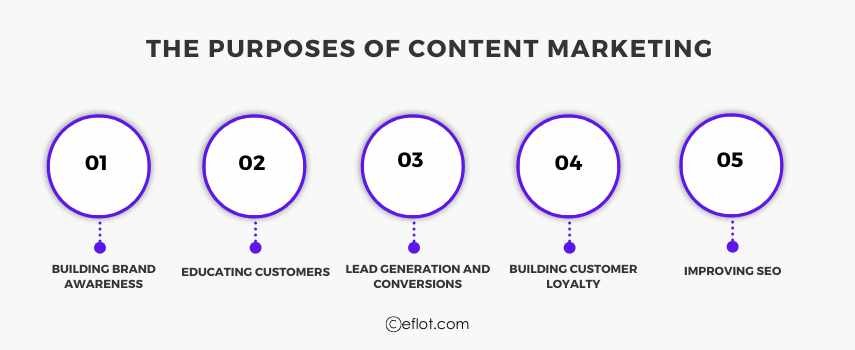
Content marketing serves various purposes, each contributing to the growth and success of your business. Here are the primary objectives of a strong content marketing strategy:
-
Building Brand Awareness: Content marketing helps increase visibility by targeting keywords, producing valuable content, and using platforms that your target audience frequents. It brings your brand to the attention of potential customers who may not have been aware of your offerings.
-
Educating Customers: Quality content provides answers to your audience's problems or questions. It builds trust and showcases your expertise, especially in industries where consumers need to understand your product or service before making a decision.
-
Lead Generation and Conversions: Well-structured content leads potential customers through the buyer’s journey. By providing valuable resources such as ebooks, guides, or whitepapers in exchange for their information, you build a pipeline of leads that can eventually be nurtured into conversions.
-
Building Customer Loyalty: By continuously offering valuable content, you cultivate relationships with existing customers, fostering repeat business. Regularly updating your audience with blog posts, newsletters, or exclusive content makes them feel connected to your brand.
-
Improving SEO: Content marketing and SEO go hand in hand. Publishing fresh, relevant content with the right keywords and optimizing for search engines boosts your rankings, improving organic traffic and visibility.
Most Common Content Marketing Types
Content marketing is versatile, and several types of content can be used to reach and engage your audience. Here are the most common forms of content marketing:
-
Blog Posts: Writing blogs is one of the oldest yet most effective content marketing strategies. It provides an opportunity to answer questions, educate your audience, and incorporate relevant keywords that help with SEO.
-
Videos: Video content is increasingly becoming the most consumed form of content online. Whether it's tutorials, product demos, or behind-the-scenes footage, videos drive high engagement rates and are shared frequently across social media.
-
Infographics: Infographics combine text, data, and visuals, making them easy to consume and share. They’re particularly effective for explaining complex data, trends, or processes in a digestible format.
-
Podcasts: Podcasts allow businesses to connect with their audience on a deeper level. It’s an ideal format for storytelling, sharing industry insights, or featuring interviews with experts. Podcasts create a more personal connection with your audience.
-
Social Media Posts: Social media is a powerful content marketing tool to engage and interact with your audience. Posts, whether organic or paid, keep your audience updated and provide opportunities for real-time communication.
-
Email Newsletters: Sending curated, valuable content directly to your audience's inbox helps maintain engagement with existing customers. Email newsletters often deliver updates, promotions, and content offers, building long-term relationships with subscribers.
-
Case Studies: Case studies are powerful because they demonstrate real-world results. When showcasing how your product or service has helped other customers, you build trust and credibility, which encourages prospects to take action.
How Does Content Marketing Help Businesses?
Content marketing helps businesses in numerous ways, driving both short-term results and long-term growth. Here are some ways it directly impacts a business:
-
Builds Brand Authority and Trust: Consistently publishing high-quality content positions your brand as a thought leader in your industry. When your audience sees that you are knowledgeable, they are more likely to trust you with their needs.
-
Generates Organic Traffic: By producing content that answers questions or provides solutions, you increase the chances of appearing in search results. As search engines reward relevant, quality content, businesses see a steady increase in organic traffic over time.
-
Improves Customer Engagement: Content allows businesses to engage with their audience, providing an opportunity to communicate and gather feedback. Engaged customers are more likely to convert and remain loyal.
-
Boosts Social Media Engagement: Content serves as the backbone of your social media strategy. Sharing valuable blog posts, videos, or infographics on social platforms can increase engagement, drive traffic, and grow your online community.
-
Improves Conversion Rates: When you deliver content that’s tailored to your audience’s needs and desires, you cultivate leads into customers. For example, a whitepaper or free consultation offer can convert a curious lead into an actual customer.
-
Cost-Effective: Compared to traditional advertising methods, content marketing is relatively low-cost but provides sustainable results. Once your content is created and optimized, it continues to work for you, attracting traffic and generating leads.
Common Benefits of Content Marketing
The advantages of content marketing are certainly. Here are some of the key content marketing benefits that businesses experience.
-
Increased Website Traffic: Quality content not only attracts visitors but also helps your website rank better on search engines, bringing more traffic and potential customers.
-
Higher Engagement: Content encourages interaction, whether it’s through blog comments, social media shares, or email responses. This higher engagement often results in stronger customer relationships.
-
Stronger SEO Rankings: Consistent, high-quality content helps your website gain authority and higher rankings on search engines, bringing in more organic traffic over time.
-
Cost-Effective Lead Generation: Content marketing allows businesses to generate leads without spending on expensive ads. Through valuable content offers, businesses can build a list of potential customers who are already interested in their products or services.
-
Better Customer Retention: Providing continuous value through content ensures that customers remain engaged with your brand, increasing loyalty and repeat business.
Starting Your Content Marketing Strategy
To start a content marketing strategy, it’s essential to define your goals. Whether it’s brand awareness, lead generation, or customer retention, your strategy should align with your business objectives.
-
Know Your Audience: Understand who your target audience is, what they care about, and where they spend their time. This will help you create content that resonates with them.
-
Create a Content Plan: Outline the types of content you want to produce, the topics you want to cover, and a publishing schedule. Make sure to cover a variety of content types blog posts, social media, videos, etc. to engage your audience across platforms.
-
Focus on Quality: Don’t just produce content for the sake of it. Ensure that your content adds value to your audience’s lives. Whether it’s educational, entertaining, or informative, make sure your content is well-crafted.
-
Optimize for SEO: Incorporate relevant keywords, and meta tags, and optimize your content for search engines. This will ensure your content is discoverable and ranks well.
-
Promote Your Content: Once your content is created, make sure it gets seen. Share it on social media, through email campaigns, and consider paid promotions to increase visibility.
-
Analyze and Refine: Use analytics tools to track the performance of your content. Based on the data, refine your strategy for better results.
Case studies
Case study1:
Pepperfry, one of India’s largest online furniture and home décor platforms, faced stiff competition in the e-commerce market. With consumers often making considered purchases for home furniture, Pepperfry needed a way to not just drive traffic but to engage potential customers and help them make informed decisions. Their challenge was to differentiate themselves from other furniture brands while building trust among first-time buyers.
Challenges:
The furniture market is heavily influenced by trust and the in-person shopping experience, making it difficult for online-only platforms like Pepperfry to convince customers to buy high-ticket items like sofas, beds, and dining tables without physically interacting with the product. The challenge was to overcome customer skepticism and educate them on the quality, delivery process, and customization options available through their online store.
Solutions:
Pepperfry adopted a comprehensive content marketing strategy to educate its audience and establish brand credibility. Their approach included blog posts, video tutorials, and product guides that explained how to choose the right furniture, how to style a home, and tips for maintaining furniture. They also started a “#PepperfryStylist” series, where interior designers and home experts offered personalized advice and ideas for customers based on their preferences.
Case Study2:
UrbanClap (now Urban Company) is an online platform that connects individuals with service professionals such as beauticians, electricians, and carpenters. When UrbanClap first started, the service industry was dominated by offline players, and customers were accustomed to contacting service professionals through word-of-mouth or traditional methods. The challenge for UrbanClap was to build credibility and trust while educating the audience about the benefits of hiring professionals via an online platform.
Challenges:
The primary challenge was overcoming doubt regarding hiring service professionals online. Many customers were hesitant to trust an online platform with their service needs, especially for tasks like home repairs, beauty treatments, and cleaning services, where customers preferred to hire known or recommended professionals. The challenge was to build the brand as a reliable, safe, and high-quality alternative to traditional service hiring methods.
Solutions:
UrbanClap invested heavily in content marketing by creating blog posts, video tutorials, and how-to guides on topics that educated their target audience. They produced content that addressed common pain points such as how to choose the right professional for specific tasks, the benefits of using a trusted online platform, and tips on maintaining their homes or taking care of personal grooming.
Content marketing is no longer an optional strategy for businesses looking to grow in the digital environment, it’s essential. From building brand awareness to increasing engagement and generating leads, the benefits of content marketing are immense. By producing valuable, relevant content and promoting it strategically, businesses can strengthen their online presence, foster customer loyalty, and drive conversions. If you're not already using content marketing, it's time to start and experience the long-term rewards it offers.
Digital Marketing services in Other Locations in India
Bangalore | Hyderabad | Chennai | Pune | Ahmedabad | Coimbatore | Mumbai | Kolkata | Patna | Amritsar | Indore | Kozhikode | Trivandrum | Jaipur | Nagpur | Gwalior | Dehradun | Noida | Vizag | Raipur | Agra | Gurgaon | Madurai | Udaipur | Thrissur |