





Fusion of Digital Marketing and Social Media
Explore the seamless fusion of digital marketing and social media in this quick guide. Uncover strategies for a successful online presence and engagement.
As a digital marketing specialist, I’ve seen how the integration of Digital Marketing and Social Media can quickly impact a brand’s sales growth. Early on, I worked with small businesses that had little to no online presence, these same businesses are growing through a combination of targeted online strategies. Over the years, it has become clear to me that Digital Marketing and Social Media are no longer optional they are essential tools for driving sales in a competitive marketplace.
What’s truly exciting is how quickly businesses can connect with their audience now, whether it's through a Facebook post, an Instagram ad, or even a tweet. Consumers are more connected than ever, and they’re constantly engaging with content online. With the right strategy, businesses can tap into this behavior, build relationships, and drive sales. The best part is that Digital Marketing and Social Media offer measurable results, meaning businesses can track what’s working and refine their strategies in real time. For small businesses, this means even with a modest budget, they can compete effectively with bigger brands. It's all about understanding your audience and creating the right message at the right time.
What are Digital Marketing and Social Media?
The impact of Digital Marketing and Social Media, let’s first define what they are and how they complement each other.
-
Digital Marketing: Refers to any marketing strategy that uses digital channels to promote a brand and connect with consumers. This includes a wide range of tactics, such as search engine optimization (SEO), pay-per-click advertising (PPC), email marketing, content marketing, and online public relations. Digital Marketing is a broad field that covers various techniques to drive traffic, engage customers, and ultimately increase sales.
-
Social Media: On the other hand, is a subset of Digital Marketing and specifically refers to platforms like Facebook, Instagram, Twitter, LinkedIn, TikTok, and YouTube, where businesses interact with their audiences. Social Media allows brands to create a more personal connection with customers through posts, videos, stories, and engagement. It's where businesses build their community, foster loyalty, and encourage conversations.
While both Digital Marketing and Social Media share the same goal of driving sales, they operate differently and serve unique functions within a marketing strategy.
Key Benefits of Digital Marketing and Social Media
Digital Marketing and Social Media each bring unique benefits to the table. When used together, they complement each other in powerful ways.
Benefits of Digital Marketing:
-
Wide Reach and Global Audience: With Digital Marketing, you can reach a global audience, regardless of your business's physical location. The internet is vast, and digital channels provide the opportunity to connect with potential customers worldwide.
-
Cost-Effective: Digital strategies such as SEO, email marketing, and content marketing are often more affordable compared to traditional marketing methods like TV ads or print media.
-
Measurable Results: One of the key advantages of Digital Marketing is its ability to provide detailed analytics. Tools like Google Analytics, SEMrush, and HubSpot allow businesses to measure website traffic, customer behavior, conversion rates, and other important metrics in real time.
-
Targeted Campaigns: With Digital Marketing, you can create highly targeted campaigns based on user demographics, interests, search history, and purchasing behavior. This makes it easier to reach the right audience at the right time.
Benefits of Social Media:
-
Direct Engagement with Customers: Social Media offers businesses a direct communication line with their customers. Brands can engage in two way conversations through comments, likes, shares, and direct messages, creating a more personal and interactive experience.
-
Brand Awareness and Community Building: Social media platforms are ideal for building brand awareness. Through consistent posting, storytelling, and community engagement, businesses can foster a loyal following and connect with their audience on a deeper level.
-
Viral Potential: Content on social media can go viral, giving businesses the chance to reach a much larger audience. A well-crafted meme, video, or post can spread change across platforms, driving both brand visibility and sales.
-
Influencer Marketing: Collaborating with influencers on Social Media can help businesses reach their target audience in an authentic, relatable way. Influencers create content that resonates with their followers, which increases brand credibility and trust.
The Difference Between Digital Marketing and Social Media
While Digital Marketing and Social Media work together, there are some key differences between the two that businesses need to understand to use them effectively.
|
Aspect |
Digital Marketing |
Social Media |
|
Definition |
A broad category of marketing efforts using online channels. |
A subset of digital marketing focused on social platforms like Facebook, Instagram, Twitter, etc. |
|
Goal |
To drive traffic, generate leads, and increase conversions across various online channels. |
To engage with customers, build brand awareness, and foster community. |
|
Channels Used |
Search engines, websites, email, paid ads, content, etc. |
Facebook, Instagram, LinkedIn, Twitter, TikTok, etc. |
|
Audience Reach |
Global, highly targeted, based on search behaviors, interests, etc. |
Mostly organic, but can also target specific demographics with ads. |
|
Content Type |
Blogs, videos, emails, paid ads, landing pages, etc. |
Posts, stories, reels, live videos, user-generated content, etc. |
|
Key Metrics |
Conversion rates, click-through rates, ROI, leads generated. |
Engagement rate, follower growth, impressions, social shares. |
|
Customer Interaction |
Limited direct interaction, primarily through email or ads. |
Direct communication through comments, DMs, and live sessions. |
How Digital Marketing and Social Media Work Together
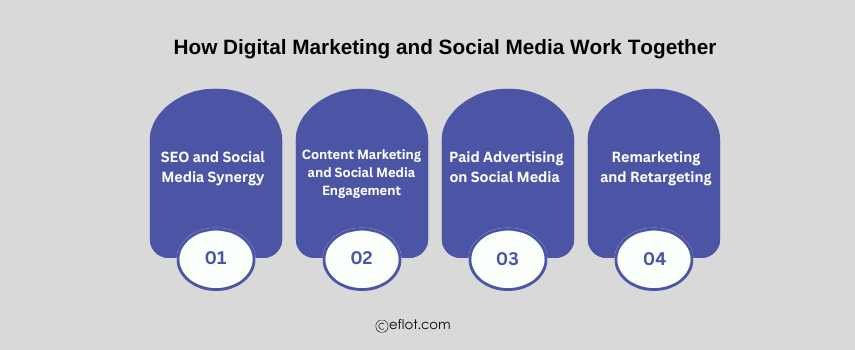
When implemented together, Digital Marketing and Social Media create a powerful sales-driving engine for businesses. Here's how they complement each other
1. SEO and Social Media Synergy
While SEO helps businesses rank higher on search engines and drive organic traffic to their website, Social Media acts as a powerful amplifier for this traffic. By sharing SEO-optimized blog posts or videos on your social media channels, you increase the chances of driving more clicks, shares, and engagement, ultimately enhancing your website’s SEO rankings.
2. Content Marketing and Social Media Engagement
Content marketing is a core element of Digital Marketing, and social media is an excellent platform for distributing content. Whether you’re sharing blog posts, infographics, or videos, Social Media allows businesses to connect with their audience and drive traffic back to their website. Engaging content that is shareable and valuable will increase your reach and visibility, generating leads and conversions.
3. Paid Advertising on Social Media
Paid campaigns on platforms like Facebook, Instagram, and LinkedIn can be used to target specific demographics and drive traffic directly to product pages or lead capture forms. These paid campaigns can complement organic SEO efforts, reaching new customers and driving sales.
4. Remarketing and Retargeting
Remarketing allows businesses to target users who have previously interacted with their website or social media. By integrating your Digital Marketing efforts (like Google Ads) with Social Media, you can retarget visitors with specific offers, driving them back to your site to complete a purchase.
Strategies to Maximize the Impact of Digital Marketing and Social Media
1. Optimize Your Website for Conversion
The journey from social media to your website must be seamless. Ensure your website is user-friendly, mobile-optimized, and has clear calls to action. Make sure the checkout process is straightforward, reducing friction for potential customers.
2. Create Shareable Content
Engage your audience with compelling, shareable content that resonates with them. Whether it's educational blog posts, entertaining videos, or infographics, share content that people want to pass along to their networks. The more shareable your content, the greater your exposure.
3. Leverage Influencer Marketing
Partnering with influencers who have a large following can significantly increase your reach. Choose influencers who align with your brand values and target audience to create authentic, persuasive content that drives sales.
4. Use Analytics to Track Success
With the vast array of tools available, it’s crucial to use data to track your performance. Whether it’s website traffic, engagement rates on social media, or paid ad performance, use analytics to fine-tune your strategies and ensure you're optimizing for sales.
Case Studies
Case Study 1:
Zyro, an AI-powered website builder, allows users to create professional websites quickly and affordably. It serves small business owners, startups, and entrepreneurs who may not have any technical expertise. Zyro has gained popularity by using Digital Marketing and Social Media strategies to make website creation accessible and appealing to a broad audience.
Challenges
Zyro faced several hurdles in marketing its AI-powered website builder. One of the primary challenges was appealing to a non-technical audience. Most of Zyro's potential customers were small business owners, startups, and entrepreneurs who had no prior experience with website building or coding. Convincing them to trust an AI driven platform for creating professional websites was a significant hurdle. Additionally, the market for website builders was already crowded with well established competitors like Wix and Squarespace, making it difficult for Zyro to carve out its own space.
Solutions
To address these challenges, Zyro focused heavily on social media marketing and influencer partnerships. By showcasing real user success stories through Instagram, Facebook, and LinkedIn, Zyro was able to demonstrate how simple and accessible the platform was, with before-and-after photos of websites built using Zyro. This helped potential customers visualize the benefits in a relatable way. Zyro also used targeted Facebook and Instagram ads to reach small business owners and digital creators, featuring clear calls to action and emphasizing the ease of use and affordability of the platform.
Case Study 2:
Fynd
Fynd is an Indian tech-enabled fashion e-commerce platform that offers consumers the ability to shop from various top fashion brands across India and have their purchases delivered from the nearest store. The company aimed to revolutionize fashion e-commerce by enabling local fashion stores to sell online while creating a seamless shopping experience for customers. The brand grew rapidly by utilizing Digital Marketing and Social Media to increase sales and improve consumer engagement.
Challenges
Fynd, a fashion e-commerce platform, faced several challenges in making a mark in a highly competitive and saturated market. One of their biggest challenges was convincing traditional offline retailers to digitize their inventory and list their products online. Many local fashion stores were hesitant to join an e-commerce platform, fearing the complexities involved. Fynd also had to tackle the challenge of convincing younger, tech-savvy consumers to trust their platform over more established players in the fashion industry.
Solutions
Fynd’s response to these challenges was a multi-pronged digital marketing strategy focused on social media marketing and influencer collaborations. They worked with prominent fashion influencers and celebrities to showcase their products on Instagram and YouTube. These influencers created engaging content that highlighted Fynd’s unique selling points, such as a wide selection of fashion brands and the convenience of shopping for local fashion from the comfort of home.
Digital Marketing and Social Media are integral components of any modern sales strategy. When used together, they allow businesses to create a seamless experience for customers, driving traffic, building brand awareness, and ultimately increasing conversions. Whether you're using SEO to drive organic traffic or running paid ads on Facebook, the combination of these digital tactics helps businesses connect with customers in meaningful ways and boost their sales. By understanding the benefits, differences, and synergies between Digital Marketing and Social Media, companies can maximize their potential and stay ahead of the competition in an increasingly digital world.
Digital Marketing services in Other Locations in India
Bangalore | Hyderabad | Chennai | Pune | Ahmedabad | Coimbatore | Mumbai | Kolkata | Patna | Amritsar | Indore | Kozhikode | Trivandrum | Jaipur | Nagpur | Gwalior | Dehradun | Noida | Vizag | Raipur | Agra | Gurgaon | Madurai | Udaipur | Thrissur |