




Digital Marketing vs Social Media Marketing
Learn the key differences between digital marketing vs social media marketing and how using both can help your business reach more customers and grow effectively.
While these two marketing approaches may seem similar, they have distinct roles and functions in promoting a business online. Understanding the key differences between digital marketing vs social media marketing is crucial for businesses to allocate resources effectively and achieve desired results.
Throughout my experience as a digital marketing specialist, I’ve worked with numerous brands that confused these two strategies, leading to missed opportunities and poor results. One client, in particular, heavily focused on social media marketing without realizing the broader potential of digital marketing, limiting their growth. After helping them balance both strategies, they saw significant improvements in web traffic, lead generation, and overall sales. This experience taught me that understanding the differences between digital marketing vs social media marketing is critical for business success.
What is Digital Marketing?
Digital marketing is a broad term that encompasses all online marketing activities used to promote products or services through digital channels. It includes strategies that target potential customers via the Internet and electronic devices.
Key Components of Digital Marketing:
-
Search Engine Optimization (SEO): Optimizing websites to rank higher on search engines like Google.
-
Pay-Per-Click Advertising (PPC): Running paid ads on platforms like Google Ads and Bing.
-
Content Marketing: Creating blogs, videos, and infographics to attract and engage audiences.
-
Email Marketing: Sending personalized emails to nurture leads and drive sales.
-
Affiliate Marketing: Partnering with third parties to promote products for commissions.
-
Search Engine Marketing (SEM): Combining SEO and PPC to increase search engine visibility.
What is Social Media Marketing?
Social media marketing (SMM) is a branch of digital marketing that focuses exclusively on using social media platforms to promote products or services. It involves creating and sharing content on platforms like Facebook, Instagram, Twitter, LinkedIn, and TikTok to engage with audiences and build brand awareness.
Key Components of Social Media Marketing:
-
Content Creation: Designing engaging posts, videos, and stories tailored to each platform.
-
Paid Advertising: Running targeted ad campaigns on social media platforms.
-
Influencer Marketing: Collaborating with influencers to promote products to their followers.
-
Community Management: Interacting with followers through comments, messages, and feedback.
-
Analytics and Insights: Tracking engagement, reach, and conversions through platform-specific tools.
Why Understanding the Difference Matters
-
Better Resource Allocation: Knowing the difference allows businesses to allocate budgets and resources effectively between broad digital strategies and focused social media campaigns.
-
Clear Marketing Goals: Understanding both strategies helps set specific goals, whether it's driving sales through digital ads or building brand awareness on social media.
-
Improved Targeting: It enables more precise targeting by using digital marketing for search intent and social media marketing for audience engagement.
-
Maximized ROI: Leveraging the strengths of both strategies can lead to higher returns on investment.
-
Comprehensive Marketing: It ensures a balanced approach, covering multiple online touchpoints instead of focusing on one channel.
Key Differences Between Digital Marketing and Social Media Marketing
|
Aspect |
Digital Marketing |
Social Media Marketing |
|
Scope of Marketing |
Covers all online marketing strategies including SEO, PPC, content marketing, and email marketing. |
Focuses solely on marketing through social media platforms. |
|
Audience Reach |
Targets audiences across search engines, websites, email, and social media for broader reach. |
Engages users only on platforms like Facebook, Instagram, LinkedIn, and Twitter. |
|
Cost and Investment |
Typically requires a larger budget due to SEO, PPC, and website management expenses. |
Can be cost-effective with organic content, but paid ads may increase costs. |
|
Content Format and Purpose |
Includes blogs, videos, emails, infographics, and paid ads tailored for multiple online platforms. |
Focuses on interactive content like posts, stories, reels, and live videos. |
|
Goals and Objectives |
Aims to drive traffic, generate leads, increase sales, and build long-term brand value. |
Primarily targets brand awareness, audience engagement, and community building. |
|
Channels Used |
Utilizes search engines, websites, emails, paid ads, and social media platforms. |
Utilizes only social media platforms like Instagram, Facebook, LinkedIn, and TikTok. |
|
Performance Tracking |
Measured using tools like Google Analytics for traffic, conversions, and ROI. |
Tracked through platform-specific analytics like Facebook Insights and Instagram Insights. |
|
Brand Engagement |
Indirect engagement through informative content and search visibility. |
Direct engagement through comments, likes shares, and direct messaging. |
How to Combine Digital Marketing and Social Media Marketing
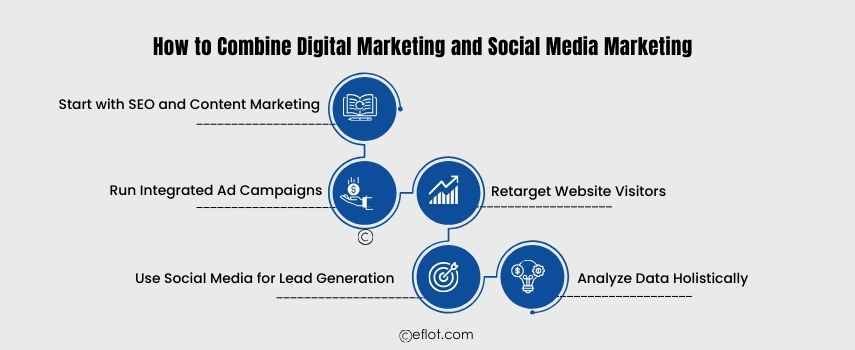
To build a successful online presence, businesses should combine both strategies effectively. Here’s how:
-
Start with SEO and Content Marketing: Use SEO to drive organic traffic while sharing blog content on social media.
-
Run Integrated Ad Campaigns: Combine Google Ads with social media ads for a wider reach.
-
Use Social Media for Lead Generation: Drive followers to landing pages optimized for conversions.
-
Retarget Website Visitors: Use social media retargeting ads to re-engage visitors who didn’t convert.
-
Analyze Data Holistically: Monitor performance across all digital channels, not just social media.
Case Studies:
Case Study1:
FlexiFit, a fitness equipment brand, was struggling to increase its online visibility and drive sales in a competitive market. The company initially focused heavily on social media marketing but wasn’t seeing significant conversions despite a strong follower base.
Challenges:
-
Low Conversion Rates: High engagement on social media, but low website traffic and sales.
-
Overdependence on Social Media: Limited use of broader digital marketing channels.
-
Ineffective Ad Targeting: Poor alignment between social media content and purchasing intent.
Solution:
To overcome FlexiFit's challenge of low conversions despite a strong social media presence, a comprehensive strategy integrating both digital marketing and social media marketing was implemented. The first step involved launching an SEO and content marketing campaign focused on fitness tips, workout routines, and product guides to improve organic search rankings. This drives high-quality traffic from users actively searching for fitness solutions. In parallel, Google Ads (PPC campaigns) were introduced, targeting high-intent keywords like "affordable home gym equipment" to capture ready-to-buy customers.
Case Study2:
PureGlow, a Bangalore-based sustainable skincare brand, initially focused its marketing solely on digital advertising through Google Ads and SEO. Although its website traffic was steady, the brand lacked emotional connection and engagement with its audience.
Challenges:
-
Low Audience Engagement: Website visits were not translating into customer loyalty or brand advocacy.
-
Lack of Brand Storytelling: Limited efforts to share the brand's sustainability mission with potential customers.
-
Minimal Social Media Presence: Inconsistent posting and low follower growth on social media platforms.
Solution:
To address PureGlow’s struggle with low engagement and brand storytelling, the brand expanded its focus beyond traditional digital marketing by blending it with creative social media marketing strategies. The first step involved partnering with eco-conscious influencers on Instagram to authentically showcase PureGlow’s products and its sustainability mission. Influencers shared personal skincare routines and product reviews, fostering trust and increasing product interest among their followers.
Understanding the differences between digital marketing and social media marketing is crucial for building a successful online presence. While digital marketing offers a broader approach to SEO, PPC, and content marketing, social media marketing focuses on real-time engagement and brand visibility on social platforms. Incorporating Local SEO tools into both strategies ensures that your business reaches the right local audience, drives website traffic, and boosts sales. Whether you're a startup or an established brand, combining these marketing efforts will help you stay ahead in the digital environment.
Digital Marketing services in Other Locations in India
Bangalore | Hyderabad | Chennai | Pune | Ahmedabad | Coimbatore | Mumbai | Kolkata | Patna | Amritsar | Indore | Kozhikode | Trivandrum | Jaipur | Nagpur | Gwalior | Dehradun | Noida | Vizag | Raipur | Agra | Gurgaon | Madurai | Udaipur | Thrissur |