




Benefits Of Pay Per Click
Drive instant traffic, boost your brand, and see real results with Pay-Per-Click advertising, your ultimate tool for fast and measurable growth.
As someone who has spent years in the digital marketing field, I’ve seen how Pay Per Click (PPC) advertising can transform businesses. It’s a tool that offers incredible value, whether you’re a small business trying to get noticed or a large company aiming to boost visibility for a new product. When I first started running PPC campaigns, I was amazed at how quickly they delivered results. Unlike other marketing methods that take time to show impact, PPC works instantly. This is what makes the Benefits of Pay Per Click stand out in the digital environment.
So, what are the Benefits of Pay Per Click? Simply put, PPC is an online advertising model where businesses pay only when someone clicks on their ad. This means every dollar spent goes towards potential customer engagement. For example, when a business runs ads on platforms like Google or Facebook, they only pay for actual clicks, not just views. This ensures that the budget is used effectively, targeting the right audience at the right time. The Benefits of Pay Per Click go beyond just cost efficiency. It helps businesses achieve immediate visibility on search engines, which is crucial in a competitive market. Imagine a small bakery launching a new line of cupcakes. With PPC, the bakery can advertise directly to people searching for “best cupcakes near me.” These ads appear instantly at the top of search results, driving traffic and sales. From my experience, PPC is a game changer for businesses of all sizes. It offers a level of control, transparency, and speed that no other marketing channel provides.
What Is Pay Per Click (PPC)?
Pay Per Click (PPC) is an online advertising model where advertisers pay a fee each time someone clicks on their ad. It’s essentially a way of buying traffic to your website rather than earning it organically. PPC ads can appear on search engines like Google or Bing, as well as on social media platforms such as Facebook, Instagram, and LinkedIn.
In the PPC model, advertisers bid on keywords or target audience demographics to ensure their ads are displayed to relevant users. For instance, if a business sells sports shoes, it might bid on keywords like “best-running shoes” or “buy sports shoes online.” When someone searches for these terms, the ad appears prominently at the top of the search engine results, increasing the chances of a click.
How Does PPC Work?
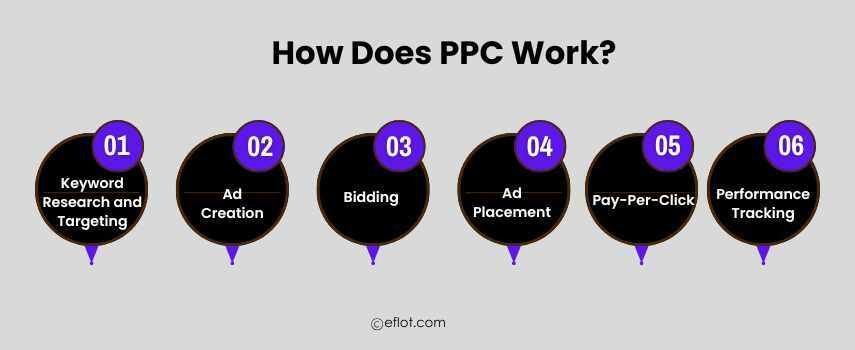
Understanding how PPC works is crucial for creating successful campaigns. Here’s a step-by-step breakdown:
-
Keyword Research and Targeting: Advertisers start by identifying the keywords their potential customers are likely to search for. For example, a fitness center might target terms like “gym near me” or “personal training programs.”
-
Ad Creation: Advertisers create compelling ad copy that attracts clicks. Ads typically include a headline, description, and link to a landing page.
-
Bidding: In PPC advertising, businesses bid on their chosen keywords. This bidding process determines how much they’re willing to pay for each click. The higher the bid (and ad quality), the more likely the ad is to appear at the top of search results.
-
Ad Placement: Once the ad is live, it’s displayed to users based on their search queries, demographics, or interests (depending on the platform). For example, on Google, ads appear at the top or bottom of the search results page.
-
Pay-Per-Click: The advertiser pays only when a user clicks on the ad. This ensures that every dollar spent is used for potential engagement.
-
Performance Tracking: PPC platforms like Google Ads provide detailed analytics, allowing advertisers to track clicks, conversions, and overall campaign performance.
Top Benefits of Pay Per Click Advertising
1. Immediate Results
Unlike SEO, which can take months to show significant results, PPC delivers instant visibility. As soon as your ad goes live, it can start driving traffic to your website. This makes PPC ideal for businesses looking to promote time-sensitive offers, seasonal sales, or product launches.
2. Highly Targeted Audience
PPC allows you to target users based on specific criteria, such as:
-
Keywords they search for.
-
Demographics like age, gender, and location.
-
Interests, behaviors, or previous interactions with your brand.
For example, a local restaurant can use PPC to target users searching for “best pizza near me,” ensuring its ads reach the right audience.
3. Cost-Effective Marketing
One of the major benefits of PPC is that you only pay when someone clicks on your ad. This ensures that your ad spend is used efficiently, targeting users who are actively interested in your product or service. Additionally, you can set daily or monthly budgets to control costs.
4. Measurable ROI
PPC provides detailed analytics, making it easy to measure return on investment (ROI). You can track metrics like clicks, impressions, conversions, and cost-per-click (CPC) to assess the success of your campaigns.
5. Boosts Brand Visibility
Even if users don’t click on your ad, seeing it at the top of search results or on social media platforms increases brand awareness. Over time, this visibility builds trust and recognition among potential customers.
What Makes PPC Advertising So Good?
PPC advertising stands out because of its flexibility, precision, and scalability. Here’s what makes it so effective:
1. Control Over Budget
With PPC, you have full control over how much you spend. Whether you have a small or large budget, you can tailor your campaigns to suit your financial goals.
2. Customizable Campaigns
PPC platforms offer a range of customization options, allowing you to target specific audiences, set bidding strategies, and choose where and when your ads appear.
3. A/B Testing
PPC enables you to test different ad variations to see which one performs better. This helps you refine your campaigns over time for maximum impact.
4. Remarketing Opportunities
Remarketing allows you to re-engage users who visited your site but didn’t convert. PPC platforms like Google Ads and Facebook make it easy to show targeted ads to these users, encouraging them to complete their purchases.
5. Integration with Other Marketing Channels
PPC works seamlessly with other digital marketing strategies, such as SEO, content marketing, and social media. For example, you can use PPC to promote blog posts or product pages, driving more traffic and engagement.
5 Reasons to Use Pay-Per-Click Advertising
1. Drives Traffic Quickly
PPC is one of the fastest ways to generate website traffic. Unlike organic methods, which take time to build, PPC can put your business in front of potential customers immediately.
2. Reaches the Right Audience
With advanced targeting options, PPC ensures your ads are seen by users who are most likely to be interested in your offerings. This increases the chances of conversions.
3. Provides Actionable Data
PPC platforms provide insights into user behavior, such as which keywords are driving the most clicks or which ads are leading to the highest conversions. This data can be used to optimize future campaigns.
4. Increases Sales and Revenue
By driving targeted traffic to your website, PPC directly contributes to increased sales and revenue. It’s particularly effective for e-commerce businesses that rely on online transactions.
5. Keeps You Competitive
In a digital environment, most businesses use PPC to stay ahead of competitors. If your competitors are running ads and you’re not, you risk losing potential customers to them.
Case Studies
Case Study1:
Amazon launched the Echo, its revolutionary smart speaker, it faced a competitive market dominated by established tech players like Google and Apple. To carve a significant market share, Amazon needed a strategy to generate immediate product visibility and drive sales.
Challenges:
-
Introducing a new product in a market with limited consumer awareness of smart speakers.
-
Competing with brands that had larger audiences and stronger visibility in the tech space.
-
Driving targeted traffic to the Echo’s product page to maximize sales.
Solutions:
Amazon used an aggressive PPC strategy across Google Ads and Amazon's advertising platform. They targeted high-intent keywords like "smart speaker," "voice assistant," and "Alexa devices," ensuring their ads appeared at the top of search results. In addition, they launched remarketing campaigns on social media platforms to re-engage users who had visited the Echo product page but didn’t make a purchase.
Case Study2:
Glossier, a direct-to-consumer beauty brand, wanted to increase sales for its flagship product, the "Boy Brow" eyebrow pomade. While Glossier already had a strong social media presence, the brand needed to reach a wider audience and drive conversions at scale.
Challenges:
-
Standing out in the competitive beauty market dominated by established players like Sephora and MAC.
-
Attracting a new audience segment unfamiliar with the brand.
-
Driving first-time purchases while maintaining a reasonable CPA.
Solutions:
Glossier launched a series of PPC campaigns on Google Ads and Instagram, focusing on high-converting keywords such as “best eyebrow pomade” and “natural brow makeup.” The ads emphasized the unique benefits of "Boy Brow," such as its easy application and natural finish. In addition, Glossier used display ads to retarget users who had previously interacted with their website or Instagram posts. They also created a sense of urgency by offering limited-time discounts for first-time buyers.
PPC advertising is a game-changer for businesses looking to grow their online presence and drive measurable results. Whether you’re a small business owner or part of a large enterprise, the benefits of Pay Per Click are undeniable, instant visibility, precise targeting, cost-effective spending, and actionable insights. As a flexible and scalable strategy, PPC works for businesses in any industry. Its ability to deliver immediate results, combined with its alignment with other marketing efforts, makes it an essential part of any digital marketing plan. If you haven’t yet explored the potential of PPC advertising, now is the time to use it and take your business to the next level.
Digital Marketing services in Other Locations in India
Bangalore | Hyderabad | Chennai | Pune | Ahmedabad | Coimbatore | Mumbai | Kolkata | Patna | Amritsar | Indore | Kozhikode | Trivandrum | Jaipur | Nagpur | Gwalior | Dehradun | Noida | Vizag | Raipur | Agra | Gurgaon | Madurai | Udaipur | Thrissur |