
























10 SEO Roles to Help People Find Your Website
Learn the 10 key SEO roles to improve your website's visibility. Find out how they can boost your online presence and attract more traffic.

Search Engine Optimization (SEO) is often viewed as a technical field, but it’s much more than just tweaking keywords and analyzing algorithms. When I first started my career as a digital marketing specialist, I quickly realized that successful SEO campaigns require teamwork across various specialized roles. Managing SEO for a client was like conducting a band every role, from content creators to technical experts, played a vital part in achieving harmony. Without a well-coordinated team covering the essential SEO roles, even the best strategies could fall short of delivering results.
For instance, I once worked with an e-commerce brand that struggled to rank on search engines. By involving the right mix of SEO roles content strategists, technical experts, and outreach specialists we not only improved their visibility but also drove a 200% increase in organic traffic within six months. This experience taught me the value of having skilled professionals in specific SEO roles to achieve impactful results. Here I will share with you the 10 most important SEO roles that can make a significant difference in helping your website rank higher, attract the right audience, and drive meaningful growth.
Understanding the Key Roles in SEO
Search Engine Optimization (SEO) is a multifaceted discipline that involves various specialized roles working together to achieve higher rankings, increased visibility, and better engagement for websites. Each role focuses on specific aspects of optimization, ensuring a comprehensive approach to success. Here’s an overview of the key roles in SEO and their significance:
1. SEO Strategist
The SEO strategist is the leader who oversees and coordinates the overall SEO efforts. They analyze market trends, define goals, and create roadmaps that align with business objectives. A strategist ensures all team members work cohesively to deliver measurable results.
2. Keyword Research Specialist
Keyword research specialists identify the search terms potential customers use to find products or services. By analyzing search volume, competition, and intent, they help the team target relevant keywords, ensuring the content resonates with the audience.
3. Technical SEO Expert
Technical SEO experts ensure that a website is structurally sound and optimized for search engine crawling and indexing. They focus on improving site speed, fixing errors, ensuring mobile responsiveness, and enhancing the overall user experience.
4. Content Writer
Content writers create engaging and informative material that incorporates targeted keywords naturally. From blogs to landing pages, their work forms the backbone of on-page optimization, driving traffic and building audience trust.
5. Link Building Specialist
These specialists focus on acquiring high-quality backlinks from authoritative sites. Backlinks are critical for improving a website’s domain authority and rankings, and link-building specialists use outreach and collaboration to achieve this.
10 Important SEO Roles
1. SEO Strategist
The SEO strategist is the architect of your optimization efforts. This role involves planning and overseeing the entire SEO strategy to ensure all efforts are aligned with business goals. They analyze competitors, identify opportunities, and prioritize tasks to create a roadmap for success. A strategist must have a deep understanding of algorithms, trends, and tools to guide the team effectively.
2. Keyword Research Specialist
Keywords are the foundation of any SEO campaign, and the keyword research specialist ensures that you’re targeting the right ones. They use tools like Google Keyword Planner, Ahrefs, and SEMrush to identify high-traffic, low-competition keywords that align with user intent. By focusing on relevant keywords, they help drive qualified traffic to your site.
3. Technical SEO Expert
The technical SEO expert ensures that your website is search-engine-friendly. They focus on improving site speed, mobile responsiveness, crawlability, and fixing issues like broken links or duplicate content. Their work lays the groundwork for search engines to index and rank your website efficiently.
4. On-Page SEO Specialist
This role focuses on optimizing individual pages on your website. The on-page SEO specialist ensures that title tags, meta descriptions, headers, and content are optimized for targeted keywords. They also work on improving internal linking and enhancing the user experience to reduce bounce rates and improve engagement.
5. Content Writer
Quality content is the backbone of SEO, and the content writer plays a critical role in creating engaging, informative, and keyword-optimized content. They focus on writing blog posts, articles, product descriptions, and landing pages that resonate with your audience while meeting SEO requirements.
6. Link Building Specialist
Backlinks are a major ranking factor, and the link-building specialist is responsible for acquiring high-quality links from reputable websites. They identify link-building opportunities through guest blogging, influencer collaborations, and outreach campaigns, ensuring your site gains authority in your niche.
7. Analytics Specialist
An analytics specialist tracks and measures the performance of your SEO campaigns. They use tools like Google Analytics, Google Search Console, and Data Studio to analyze traffic, monitor keyword rankings, and measure conversion rates. Their insights help the team make data-driven decisions to optimize strategies.
8. Local SEO Specialist
For businesses with a physical presence, the local SEO specialist focuses on optimizing your online presence for local searches. This includes managing Google My Business profiles, optimizing location-specific keywords, and encouraging customer reviews to improve visibility in local search results.
9. Social Media Manager
Although not traditionally part of SEO, a social media manager plays a complementary role by promoting your content and driving engagement through social platforms. Social signals, such as likes and shares, indirectly boost your SEO efforts by increasing visibility and driving referral traffic.
10. SEO Trainer
An SEO trainer educates internal teams and clients about SEO best practices. They ensure that everyone involved understands how SEO works and how their roles contribute to the bigger picture. By empowering teams with knowledge, the trainer helps maintain consistency and efficiency in SEO efforts.
How to Build an Effective SEO Team
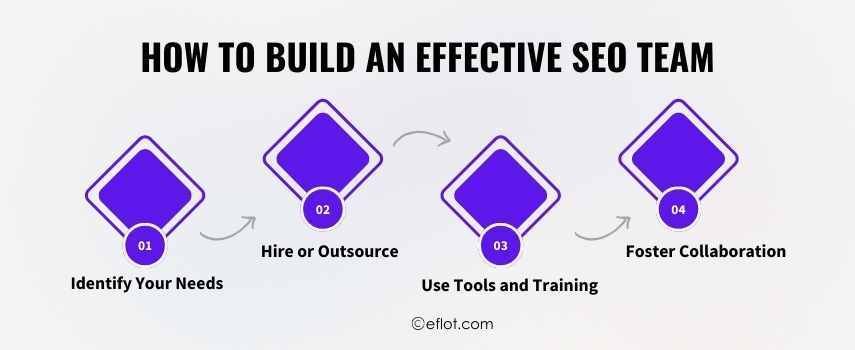
Building an effective SEO team is essential for executing a well-rounded strategy that boosts your website’s visibility and drives long-term results. Here’s a more detailed guide on the steps to assemble and manage a high-performing SEO team:
1. Identify Your Needs
The first step in building an SEO team is understanding your specific requirements. Evaluate your website’s current performance using tools like Google Analytics and Search Console to identify gaps and opportunities.
-
Assess Current Performance: Determine which areas need improvement, such as content quality, technical SEO, or link building.
-
Define Goals: Outline your business objectives, such as increasing organic traffic, improving local search rankings, or enhancing user engagement.
-
Prioritize Roles: Depending on your needs, decide which roles are essential do you need a content writer, a technical SEO expert, or both?
By clearly identifying your needs, you can allocate resources effectively and focus on areas that deliver the highest ROI.
2. Hire or Outsource
Deciding whether to hire in-house or outsource SEO tasks depends on your budget, team size, and expertise.
-
In-House Team: Ideal for businesses that need consistent, long-term SEO work. Hiring in-house allows for greater control and deeper alignment with your business goals.
-
Outsourcing to an Agency: Agencies bring specialized skills and experience to the table, making them a good choice for businesses that lack internal expertise or need short-term support.
-
Hybrid Approach: Combine both by having an in-house strategist or project manager who coordinates outsourced work.
Weigh the pros and cons of each option, and choose the approach that aligns with your business needs and budget constraints.
3. Use Tools and Training
To succeed in SEO, your team needs access to the right tools and continuous learning opportunities.
Essential SEO Tools:
-
SEMrush and Ahrefs: For keyword research, competitor analysis, and backlink audits.
-
Google Analytics and Search Console: For tracking traffic, monitoring performance, and identifying technical issues.
-
Screaming Frog: To perform site audits and detect problems like broken links or duplicate content.
-
Yoast SEO or Rank Math: For on-page optimization in WordPress.
Training and Skill Development:
-
Provide access to industry resources such as blogs, webinars, and online courses (e.g., Moz, HubSpot Academy, Coursera).
-
Encourage team members to earn certifications, such as Google Analytics or HubSpot Content Marketing.
-
Host internal knowledge-sharing sessions to ensure everyone stays updated on the latest trends and algorithm changes.
An equipped and well-trained team is more efficient and capable of adapting to the ever-changing SEO landscape.
4. Foster Collaboration
SEO is a multidisciplinary effort that requires seamless collaboration among team members. A lack of communication can lead to siloed efforts and inefficiencies.
-
Encourage Regular Meetings: Schedule team check-ins to review progress, discuss challenges, and align on goals.
-
Centralized Tools for Communication: Use project management tools like Trello, Asana, or Slack to streamline communication and task management.
-
Cross-functional collaboration: Foster partnerships between SEO specialists, content writers, and social media managers to create cohesive strategies. For instance, a content writer can work with the keyword specialist to ensure articles align with search intent.
Case Studies
Case Study1:
A startup selling eco-friendly water bottles made from sustainable materials was struggling to make an impact online. Despite offering a unique product aimed at environmentally conscious consumers, the brand lacked visibility on search engines and faced stagnant online sales.
Challenges:
-
Low search engine rankings for product-related keywords.
-
Limited website traffic and engagement.
-
Difficulty in establishing authority in a competitive eco-friendly product market.
Solutions:
The SEO team devised a multi-faceted approach to overcome these challenges. First, they conducted in-depth keyword research to identify relevant search terms like “sustainable water bottles” and “best reusable bottles for travel.” These keywords were integrated into the website’s product descriptions, category pages, and blog content.
Case Study2:
A handmade jewellery brand offering custom designs struggled to stand out in a crowded online marketplace. Despite their unique offerings, the brand lacked visibility on search engines, which limited its ability to reach new customers.
Challenges:
-
Low rankings for relevant keywords like “custom handmade jewellery” and “artisan necklaces.”
-
Poor engagement due to limited brand awareness.
-
Lack of backlinks from authoritative sites, reducing domain authority.
Solutions:
The SEO team began by identifying long-tail keywords that matched the brand’s niche, such as “custom handmade silver rings” and “artisanal jewellery for weddings.” These keywords were integrated into product pages, meta descriptions, and alt tags for images.
Building a strong SEO team with specialized roles is essential for improving your website’s visibility, attracting the right audience, and driving growth. Whether you’re just starting or refining your approach, investing in the right SEO roles can make all the difference in achieving long-term success. By understanding the importance of each role and integrating them into your strategy, you’ll be better equipped to help more people find and connect with your website.
Digital Marketing services in Other Locations in India
Bangalore | Hyderabad | Chennai | Pune | Ahmedabad | Coimbatore | Mumbai | Kolkata | Patna | Amritsar | Indore | Kozhikode | Trivandrum | Jaipur | Nagpur | Gwalior | Dehradun | Noida | Vizag | Raipur | Agra | Gurgaon | Madurai | Udaipur | Thrissur |